How Long Does AC Replacement Take in the DFW Area? Here’s What to Expect
How long does AC replacement take in the DFW area depends on a few key factors — but most homeowners can expect their new system up and running within a single day. Here’s a quick breakdown:
| Project Type | Typical Duration |
|---|---|
| Standard AC changeout (existing ductwork) | 4–8 hours |
| Full system replacement (AC + air handler) | 6–10 hours |
| Replacement with ductwork modifications | 1–3 days |
| New installation with full ductwork | 3–5 days |
When summer temperatures in North Texas routinely push past 100°F, a dead air conditioner isn’t just uncomfortable — it’s a genuine health concern. For DFW homeowners, the question isn’t just whether to replace a failing system, it’s how quickly life can get back to normal after they do.
The good news is that most residential AC replacements in the Dallas-Fort Worth area wrap up in a single day. A straightforward swap using your home’s existing ductwork typically takes four to eight hours from the time the crew arrives to the moment your new system kicks on. More involved jobs — ones that require ductwork repairs, electrical upgrades, or a full system overhaul — can stretch to two or three days.
This guide walks you through exactly what drives those timelines, what to expect on installation day, and how to help things go as smoothly as possible.
Average Timeline: How Long Does AC Replacement Take in the DFW Area?
When we talk about a standard AC Replacement, we are usually referring to a “like-for-like” swap. This means we are removing your old outdoor condenser and indoor evaporator coil and installing modern, highly efficient versions in the exact same locations.
For the vast majority of our neighbors in North Texas, this standard changeout is a same-day service. Our experienced installation crews arrive in the morning and have the cool air flowing again before you sit down for dinner.
To help you visualize the timeline of your upcoming project, here is a detailed breakdown of how long various installation scenarios typically take:
| Installation Type | Estimated Time | What is Included? |
|---|---|---|
| Standard Condenser & Coil Swap | 4 to 8 Hours | Removing the old outdoor unit and indoor coil, running new copper line sets, installing the new equipment, and charging the refrigerant. |
| Full System Changeout (AC + Furnace) | 6 to 10 Hours | Replacing both the cooling components and the gas furnace or air handler at the same time to ensure perfect system compatibility. |
| Ductless Mini-Split Installation | 4 to 8 Hours (per zone) | Perfect for targeted comfort in specific rooms, requiring only a small outdoor unit and wall-mounted indoor blowers without ductwork. |
| Complex Retrofit / Relocation | 1 to 3 Days | Moving the indoor unit to a different location (like from a closet to the attic) or completely redesigning the equipment layout. |
| Full System with New Ductwork | 3 to 5 Days | Designing, fabricating, and running brand new insulated ductwork throughout the entire home alongside the equipment installation. |
While we always strive for maximum efficiency, we never rush the process. A rushed installation is the leading cause of premature equipment failure, refrigerant leaks, and airflow issues down the road. Taking the time to perform meticulous pressure testing, pull a deep vacuum on the refrigerant lines, and calibrate the system ensures your investment runs flawlessly for years to come.
Key Factors That Influence Your Installation Timeline
No two homes in the Metroplex are identical. A historic home in Highland Park presents vastly different installation challenges than a newer suburban home in Trophy Club. When we evaluate your home for our comprehensive HVAC Services, we look at several logistical factors that directly influence how many hours our crew will spend on-site.
- Home Size and System Capacity: Larger homes often require larger equipment or even multiple split systems. Installing a single 2-ton system takes less time than installing two separate systems to handle a zoned multi-story layout.
- Location of the Indoor Unit: If your indoor air handler or furnace is located in an easily accessible utility closet or garage, the swap goes incredibly fast. However, if your system is tucked deep inside a tight attic with a narrow pull-down ladder, our technicians have to work carefully and methodically to safely navigate the space.
- Attic Access and Obstacles: Moving heavy equipment through a cramped attic requires extra manpower and time. Tight rafters, low rooflines, and limited decking can slow down the removal and installation phases as we prioritize safety and protecting your ceilings from accidental damage.
Ductwork Condition and Airflow Modifications
Your ductwork is the circulatory system of your home. You can buy the most advanced, high-efficiency air conditioner on the market, but if your ducts are crushed, undersized, or full of holes, you won’t get the comfort or efficiency you expect.
Before we set up any new equipment in Grapevine, we conduct a thorough inspection of your duct system. If we discover significant air leaks, disconnected joints, or deteriorated insulation, we will recommend repairs.
In North Texas, attic temperatures can easily soar past 140°F in July. If your ducts are leaking cold air into a scorching attic, your new system will have to work twice as hard. Repairing or replacing ductwork can add anywhere from a few hours to several days to the project timeline, but it is the single best way to ensure your new system delivers peak performance.
Electrical Upgrades and Thermostat Setup
Modern high-efficiency air conditioners have different electrical requirements than systems built a decade or two ago. During our pre-installation inspection in Southlake, we check your electrical panel to ensure it can safely handle the electrical load of the new equipment.
If your home has an older electrical panel or outdated wiring, we may need to upgrade the circuit breakers, install a new outdoor disconnect box, or run new wiring. Additionally, installing a modern smart thermostat requires a dedicated “C-wire” (common wire) for continuous power. If your old thermostat lacked this wire, running a new thermostat cable through your walls adds a bit of time to the setup, but it unlocks advanced energy-saving features and remote comfort control.
What to Expect on Your DFW AC Installation Day
Knowing what happens during the day can help ease any anxiety about having a service crew in your home. When you schedule an installation with us, we coordinate everything to minimize disruption to your busy schedule across our Service Area.
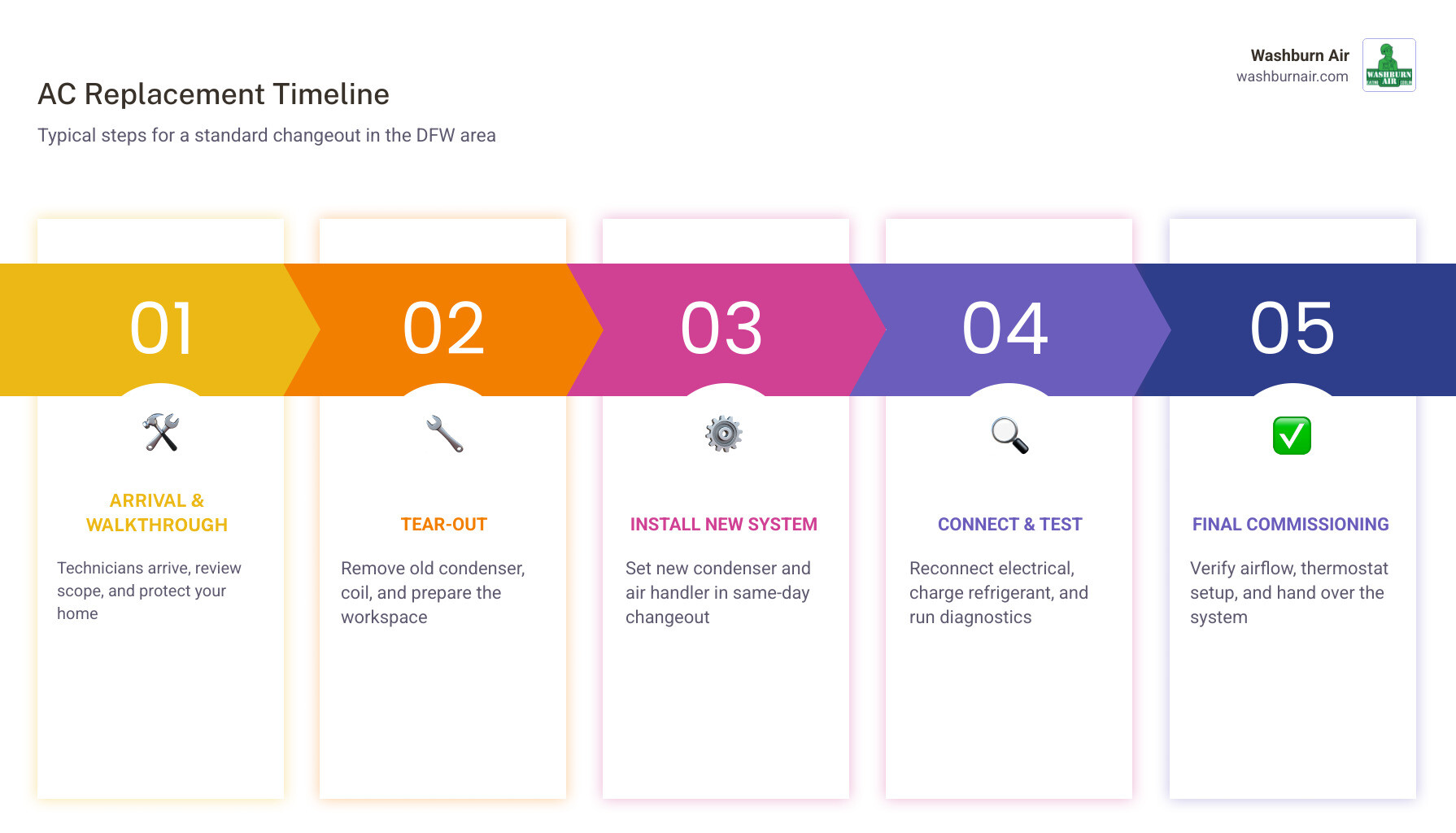
Here is a typical hour-by-hour look at how a standard installation day unfolds:
- 8:00 AM – 9:00 AM: Arrival and Preparation: Our crew arrives in our clearly marked service vehicles. The lead technician will walk you through the plan for the day, identify access routes, and place protective drop cloths down on your flooring to shield your home from dirt and debris.
- 9:00 AM – 11:30 AM: Old System Tear-Out: We safely recover the old refrigerant according to strict EPA guidelines. Once the system is clear, we disconnect the electrical lines, cut the old copper lines, and carefully remove the heavy outdoor condenser and indoor coil.
- 11:30 AM – 3:00 PM: Equipment Placement and Connection: We prepare the installation areas. This includes leveling the outdoor pad, installing vibration-absorbing pads, and positioning the new indoor and outdoor units. We then braze the new copper lines, connect the electrical wiring, and install the new drain lines and safety float switches.
- 3:00 PM – 4:30 PM: System Testing and Calibration: We perform a pressure test using dry nitrogen to ensure there are absolutely no leaks in the new lines. Next, we use a specialized vacuum pump to remove all moisture and air from the system before releasing the fresh refrigerant.
- 4:30 PM – 5:30 PM: Commissioning and Walkthrough: We turn the system on, measure the airflow, check the system pressures, and verify that the temperature drop across the indoor coil is perfect. Finally, we clean up our work areas, walk you through how to use your new thermostat, and answer any questions you have.
Managing the “No-Cool” Window: How Long Does AC Replacement Take in the DFW Area?
The “no-cool” window is the period during the installation when your home will be completely without air conditioning. During a hot summer day in Fort Worth, your home can heat up surprisingly fast once the old system is disconnected.
Typically, this no-cool window lasts between three and six hours. To make this period as comfortable as possible, we recommend utilizing a “thermal battery” strategy. The night before your installation, turn your existing AC down to 68°F or 70°F. This will deeply cool your home’s walls, furniture, and flooring. When we turn the system off in the morning, your home will hold onto that cool air much longer, keeping the indoor temperature manageable while we work.
Navigating Local Permits and City Inspections
Many homeowners ask if a mechanical permit is really necessary for an AC replacement. The answer is a resounding yes. Cities across the metroplex, including Dallas, require a municipal permit for HVAC replacements.
This requirement is in place for your protection. Once the installation is complete, a city building inspector will visit your home to review our work. They verify that the electrical connections, structural supports, and safety controls meet all local building codes.
While pulling permits and scheduling inspections doesn’t change the actual day-of installation time, it does require some coordination. We handle the entire permitting process for you, from submitting the initial paperwork to helping you coordinate the final inspection with the city.
Deciding Between a Quick Fix and a Full System Upgrade
When your air conditioner starts acting up, you have to decide whether to patch it up with another repair or invest in a complete system upgrade. It can be tempting to opt for a quick fix, but there comes a point where continuing to repair an old system is simply throwing good money after bad.
If you are trying to make this decision, we highly recommend reading our detailed guide on Should I Repair or Replace My AC in North Texas? for a deep dive into the math behind this choice.
Generally, if your system is over 12 years old, requires frequent repairs, or uses obsolete R-22 refrigerant, upgrading to a modern system is the most reliable and cost-effective path forward. A new system will immediately lower your monthly utility bills, eliminate the stress of unexpected breakdowns, and provide superior humidity control during our humid summer months.
Repair vs. Upgrade: How Long Does AC Replacement Take in the DFW Area?
If you are dealing with a cooling emergency, the speed of the solution is often your top priority. A standard AC Repair can often be completed in an hour or two, assuming the technician has the necessary parts on their service truck.
However, if your compressor has failed or your coils are severely leaking, a complex repair can take almost as long as a full replacement. If you are in Arlington and facing a major component failure on a system nearing the end of its natural lifespan, choosing a replacement is often the faster route to long-term peace of mind. Instead of waiting days for a specialty replacement part for an obsolete system, we can often install a brand-new, fully warranted system the very next day.
To help you plan your finances and understand the long-term investment of a new system, you can also explore our comprehensive guide on the Cost to Replace Air Conditioner.
Frequently Asked Questions About DFW AC Installation Timelines
We know you have questions about how a replacement fits into your busy schedule. Here are some of the most common questions we hear from homeowners in Westlake, Irving, and Highland Park:
Can an AC replacement be completed in a single day?
Yes, the vast majority of standard residential AC replacements are completed in a single day. If your home has existing, functional ductwork and does not require complex electrical upgrades, our team will have the entire project wrapped up in four to eight hours.
To ensure a single-day completion, we recommend scheduling your installation during the spring or fall shoulder seasons if possible. During these milder months, our team is not rushed by emergency service calls, and attic temperatures are much safer, allowing our technicians to work faster and more comfortably.
Do I need to be home during the entire installation process?
While you do not need to stand over our shoulders the entire day, we do require an adult over the age of 18 to be present at the beginning and the end of the installation.
At the start of the day, we need to review the project plan, gain access to your indoor utility closet or attic, and identify where your electrical panel is located. At the end of the day, we need you there for the final walkthrough. This is when we show you the completed work, explain how to operate your new thermostat, and review the warranty documentation. During the middle of the day, many homeowners feel perfectly comfortable running errands or working from a home office while our crew works.
How can I prepare my home to speed up the installation?
A little bit of preparation goes a long way in helping our crew work efficiently. Here are a few simple steps you can take before our arrival to save time:
- Clear the Paths: Move any furniture, rugs, or wall decor along the pathways leading to your attic access, utility closet, and thermostat.
- Provide Attic Access: If your attic ladder is located in a garage or closet, clear out any stored items underneath so we can safely lower the stairs.
- Clear the Outdoor Area: Trim back any bushes, vines, or tall grass around your outdoor condenser unit to give our technicians plenty of room to work.
- Secure Your Pets: The sound of power tools and constant foot traffic can be stressful for pets. Keep your dogs and cats safe and comfortable in a closed room away from the work areas.
- Unlock Gates: Ensure our team has easy access to your backyard by unlocking any side gates or fence doors.
If you reside in Irving, Highland Park, Westlake, or Trophy Club, our local crews are highly familiar with the unique home layouts and municipal permitting rules in your specific neighborhood, ensuring a smooth, hassle-free installation day.
Conclusion
Replacing your home’s air conditioner is a significant home improvement project, but it doesn’t have to disrupt your life. By understanding how long does ac replacement take in the dfw area, you can plan ahead, prepare your home, and minimize any temporary discomfort.
At Washburn Air, we are committed to providing our neighbors across the Dallas-Fort Worth metroplex with transparent, high-quality, and efficient service. Whether you are dealing with an urgent cooling emergency or proactively upgrading to a high-efficiency system, our experienced team is here to guide you every step of the way. We combine local expertise with 24/7 support to keep your home comfortable in any season.
Ready to experience the difference that professional, engineering-based installation makes? Contact us today to schedule your home comfort assessment and take the first step toward a cooler, more efficient home with our trusted AC Replacement services.