Why DFW Homeowners Need to Know How Hail and Severe Weather in the DFW Area Damages Outdoor AC Units
How hail and severe weather in the DFW area damages outdoor AC units is something most North Texas homeowners discover at the worst possible moment — when their system stops cooling on a 100-degree July afternoon.
Here’s a quick breakdown of the most common ways DFW storms damage your outdoor AC unit:
- Bent or flattened condenser fins — Hail dents the thin aluminum fins on your condenser, blocking airflow and forcing your system to work harder
- Crushed or punctured coils — Large hailstones can press fins directly into copper coils, causing refrigerant leaks
- Electrical damage — Power surges from lightning fry capacitors and control boards, sometimes without any immediate warning signs
- Wind-blown debris — Straight-line winds exceeding 70 mph turn yard objects into projectiles that crack refrigerant lines and damage fan blades
- Flooding — Heavy rain can submerge ground-level units, corroding electrical components and motor bearings
- Pad and foundation shifting — Dallas’s clay soil expands and contracts with moisture, cracking concrete pads and stressing refrigerant connections
Dallas sits in the heart of Tornado Alley. The area averages 37 thunderstorm days per year, with peak activity from April through June — and an average of six hail events annually, with some storms dropping hailstones larger than two inches in diameter. That’s not a rare bad-luck scenario. That’s the standard DFW spring season, and your outdoor AC unit is sitting right in the middle of it.
The good news is that knowing what to look for after a storm can mean the difference between a quick repair and a full system replacement. This guide walks you through exactly how to assess the damage, what to tell your insurance company, and when to call a professional.
How Hail and Severe Weather in the DFW Area Damages Outdoor AC Units
Living in the Dallas-Fort Worth metroplex means accepting that our weather has a flair for the dramatic. One minute we are enjoying a mild, sunny morning, and the next, a supercell is rolling through Grapevine or Southlake, dropping golf ball-sized hail and unleashing straight-line winds exceeding 70 mph.
When these severe weather systems strike, our outdoor air conditioning units—often treated like indestructible metal lawn ornaments—take the brunt of the physical impact. Understanding how hail and severe weather in the DFW area damages outdoor AC units requires looking at both the immediate physical destruction and the subtle, delayed mechanical failures that follow.
During a classic North Texas storm, several environmental forces work together to threaten your system:
- High-Velocity Hail Impact: Hailstones falling from high altitudes carry immense kinetic energy. When they strike the delicate exterior of your condenser, they easily crush the soft aluminum fins designed to facilitate heat exchange.
- Debris and Projectiles: Strong winds turn patio furniture, loose tree branches, and landscape gravel into high-speed projectiles. These can dent the heavy steel cabinet, fracture fan blades, or snap the external copper refrigerant lines.
- Clay Soil Shifting: DFW is famous for its heavy clay soil. When a severe storm drops inches of rain in a short period, this soil saturates and expands. As it dries, it contracts. This rapid shifting can crack concrete equipment pads or cause them to tilt, putting immense physical stress on the connected refrigerant lines and electrical conduits.
If your system has recently been exposed to a severe storm, scheduling professional HVAC Services is the best way to ensure hidden mechanical issues are identified before they turn into complete system failures.
The Impact of Condenser Fin and Coil Damage
To understand why a few dents on your AC unit matter so much, we have to look at how your air conditioner actually cools your home. The outdoor unit’s primary job is to release the heat that was absorbed from your indoor air. It does this by pumping refrigerant through copper coils wrapped in thousands of ultra-thin aluminum condenser fins. The outdoor fan pulls air through these fins, carrying the heat away into the surrounding atmosphere.
When hail strikes these delicate aluminum fins, it bends and flattens them. This creates a physical barrier to airflow.
- Airflow Restriction: Flattened fins act like a clogged air filter on the outside of your system. With the pathways blocked, the fan cannot draw enough air across the coils to dump the heat.
- Increased Compressor Strain: Because the heat cannot escape, the compressor has to work significantly harder and run much longer to achieve the same cooling effect inside your home.
- Runtime and Efficiency Spikes: An inefficient, damaged unit will see runtime increases of 20% to 50% just to keep up with the North Texas heat. This extra run time translates directly to higher electricity bills and rapid wear and tear on critical internal components.
If more than 30% of your fins are severely bent or crushed, you are looking at a major hit to your system’s lifespan. Ignoring this level of damage can lead to premature compressor burnout—a highly complex and expensive issue. Homeowners often overlook this connection, but understanding The Impact of Neglecting AC Inspections and Repairs on Your System is crucial to preventing a minor storm dent from cascading into a total system replacement.
Comparing Cosmetic vs. Functional AC Damage
Not all storm damage is created equal. After a hailstorm passes through Irving or Arlington, you might look at your outdoor unit and see a few minor dings on the outer protective grille. Is it just an eyesore, or is your system in jeopardy? Distinguishing between cosmetic and functional damage is key to deciding whether you need a quick comb-out or an emergency repair.
- Cosmetic Damage: This includes minor scratches on the painted cabinet, small dings on the heavy-gauge metal top top-grille, or isolated bent fins covering less than 10% of the unit’s surface area. If the system runs quietly, cools effectively, and shows no signs of fluid leaks, the damage is likely cosmetic.
- Functional Damage: This occurs when the physical structure of the cooling mechanism is compromised. If hail has flattened large sections of the fins (violating the “30% rule”), or if a piece of flying debris has bent the copper tubing, the unit’s ability to transfer heat is compromised. More severely, if a hailstone punctures the copper coil itself, it will cause a refrigerant leak, rendering the system entirely unable to cool.
| Damage Type | Visual Indicators | System Impact | Action Required |
|---|---|---|---|
| Minor Cosmetic | Isolated dings on cabinet; < 10% of fins bent; no oil stains. | None; system operates at normal efficiency. | Monitor during regular seasonal maintenance. |
| Moderate Functional | 10% to 30% of fins flattened; minor debris inside cabinet. | Reduced airflow; 10% to 15% efficiency loss; slightly longer runtimes. | Professional fin combing and debris removal. |
| Severe Functional | > 30% of fins crushed; bent copper tubing; oily residue on coils; fan blade out of alignment. | Severe airflow restriction; refrigerant leak; compressor overheating; high risk of system failure. | Professional repair, coil replacement, or full system replacement. |
A key warning sign of functional coil damage is the presence of an oily residue on or around the aluminum fins. Refrigerant circulates alongside a specific lubricant oil; if a coil is punctured, this oil escapes and coats the surrounding area, trapping dirt and dust. If you suspect your system has developed a leak after a storm, reading about Understanding Refrigerant Leaks Causes and Solutions can help you understand the next steps for safe, professional recovery.
Step-by-Step Guide to Assessing and Inspecting Storm Damage
Once the storm has passed and it is completely safe to go outside, performing a structured visual and operational assessment of your outdoor AC unit is highly recommended. Catching the signs of how hail and severe weather in the DFW area damages outdoor AC units early can prevent secondary failures, like a strained compressor giving out during a subsequent heatwave.
Before you begin, establish strict safety protocols:
- Never approach the outdoor unit if there is standing water around it. Electrical current can ground through water, creating a severe shock hazard.
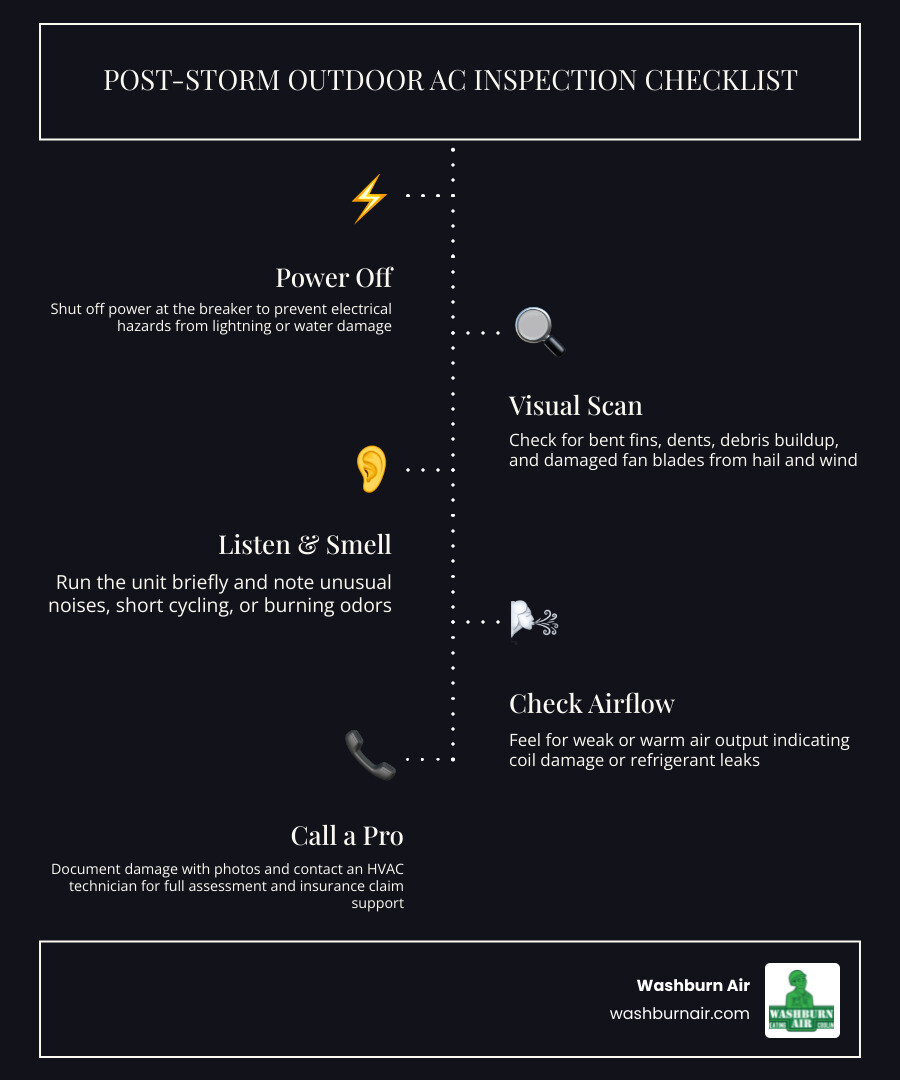
- Ensure the power is off before touching the unit. If you are clearing loose leaves or small twigs from the top grille, turn off the system at the thermostat and pull the electrical disconnect switch located in the metal box on the wall near your unit.
- Do not attempt to insert tools or fingers through the grille to straighten fins yourself. Aluminum fins are incredibly sharp and easily sliced, and you risk puncturing the pressurized copper lines beneath them.
Visual Inspection: Identifying How Hail and Severe Weather in the DFW Area Damages Outdoor AC Units
With the system safely powered down, walk around your outdoor condenser and perform a thorough visual check from all sides:
- Inspect the Condenser Fins: Look closely through the protective outer metal guard. Are the shiny aluminum fins straight and uniform, or do you see patches where they look flattened, crushed, or pushed together? Pay special attention to the side of the unit that faced the oncoming wind during the storm.
- Check for Debris Buildup: DFW winds can pack leaves, twigs, mulch, and torn roofing shingles tightly against the condenser coils. This debris blocks airflow just as effectively as bent fins.
- Examine the Fan Blades and Motor: Look down through the top grille. Ensure the fan blade is not bent, chipped, or blocked by fallen branches.
- Look for Cabinet Dents and Shifting: Check if the heavy outer metal housing is severely dented or if the entire unit has shifted off its concrete pad.
- Search for Oil Stains: Check the copper lines and the base of the unit for any dark, greasy spots. As mentioned, this is a prime indicator of a refrigerant leak.
Identifying these physical changes early can save you from major headaches. If you spot any of these issues, consult our guide on Air Conditioner Repair Warning Signs to understand how these visual symptoms connect to internal system health.
Operational Checks: Spotting Hidden Issues After DFW Storms
If your visual inspection reveals no obvious crushed coils, standing water, or major debris, you can restore power to the unit and perform an operational check. Turn the system on at your thermostat and monitor its behavior closely:
- Listen for Strange Noises: A healthy condenser produces a steady, low hum and the smooth whir of the fan. If you hear loud rattling, metallic screeching, or a heavy grinding sound, turn the system off immediately. This could indicate a bent fan blade striking the grille or internal compressor damage.
- Watch for Short Cycling: If your AC turns on, runs for just a few minutes, and then abruptly shuts off before restarting a short time later, it is short cycling. This is often triggered by safety sensors detecting overheating or incorrect pressure due to a refrigerant leak or restricted airflow.
- Feel the Airflow: Stand near the outdoor unit. You should feel warm air being forcefully blown out of the top. If the air is cool or barely moving, the fan motor may be damaged, or the fins may be too crushed to allow heat transfer.
- Monitor the Indoor Vents: Go inside and verify that cool air is actively blowing from your registers. If the air is lukewarm or warm, the system is struggling.
Electrical surges from nearby lightning strikes can also weaken capacitors and control boards, causing the system to run poorly or fail to start entirely a few days after the storm. If your system exhibits any of these behaviors, learn more about Why Your Outdoor AC Unit Keeps Shutting Off to help diagnose the root cause.
Navigating Insurance Claims and Professional Repairs
If your inspection reveals significant physical or operational damage, your next step is navigating the repair and insurance claim process. Because standard homeowners insurance policies in Texas typically cover sudden and accidental damage from wind, lightning, and hail, your outdoor AC unit is generally covered under your dwelling protection. However, getting a claim approved requires proper documentation and professional verification.
Documenting How Hail and Severe Weather in the DFW Area Damages Outdoor AC Units for Insurance
Insurance adjusters deal with hundreds of roof and property claims after a major DFW storm, and outdoor AC units are frequently overlooked or dismissed as having only “cosmetic” damage. To ensure your system is fully evaluated and covered, follow these documentation steps:
- Take Detailed Photos and Videos: Before anything is moved or cleaned, take clear, high-resolution photos of the unit from all four sides. Take close-ups of the crushed fins, dented panels, and any debris that struck the system.
- Document the Context: Take photos of the surrounding yard, showing fallen tree branches, damaged roofing shingles, or hail on the ground next to the unit to prove the severity of the storm event.
- Locate the Manufacturer’s Plate: Photograph the metal data plate on the side of your unit showing the model number, serial number, and manufacture date.
- Keep Your Maintenance Records: Having a history of regular professional maintenance proves to your insurance provider that the system was in good working order before the storm, preventing them from claiming the issues are due to pre-existing wear and tear.
Once you have documented the physical evidence, contact a licensed professional to perform a comprehensive diagnostic assessment. A detailed, written technician’s report explaining how the physical damage has compromised the system’s efficiency and lifespan is the most powerful tool you can have during adjuster meetings. If you need professional assistance in assessing and documenting storm damage, our team is ready to provide expert AC Repair services to get your system back in top shape.
Deciding to Repair or Replace Your Damaged System
When faced with extensive storm damage, you will eventually have to make a choice: do you repair the damaged components, or is it time for a full system replacement?
To make an informed decision, we often use a conceptual framework known as the “Age times Repair Cost” rule. If you multiply the age of your outdoor unit by the estimated cost of the repairs and the total exceeds a standard replacement threshold, investing in a new, energy-efficient system is usually the more cost-effective long-term choice.
Other factors to consider include:
- The 30% Fin Rule: If more than a third of the condenser fins are permanently flattened, a simple fin comb will not restore proper airflow. In these cases, you are looking at a full coil replacement, which is a major, highly technical repair.
- Refrigerant Type: If your older unit uses R-22 refrigerant (which is phased out and highly restricted), repairing a major leak is rarely practical.
- System Age: If your unit is already 12 to 15 years old—the typical lifespan for an AC in our demanding North Texas climate—investing in a modern system will significantly improve your home’s comfort and lower your summer energy bills.
For a deeper dive into making this decision, read our comprehensive guide: Should I Repair or Replace My AC in North Texas?.
Frequently Asked Questions about DFW AC Storm Damage
Is it safe to run my AC immediately after a hailstorm?
If the storm was severe enough to drop significant hail or cause local flooding, we do not recommend running your system immediately. Turn the AC off at the thermostat and perform a quick outdoor visual check first. Running a unit with a blocked top grille can burn out the fan motor, while starting a system with water logged electrical compartments can cause short circuits and permanently fry control boards. If everything looks clear, dry, and free of physical damage, you can safely turn the system back on. If you encounter issues when restarting, read about Common AC Issues and How to Troubleshoot Them Effectively.
Can bent condenser fins be repaired, or do I need a replacement?
It depends entirely on the extent of the damage. If only a small section of the fins is bent (less than 30%), an HVAC technician can use a specialized tool called a “fin comb” to carefully slide through the aluminum tracks and straighten them back into place. However, if a large percentage of the fins are completely flattened or pressed into the copper tubing, combing is no longer effective, and a professional coil replacement or full AC Replacement is required.
Does standard homeowners insurance cover AC hail damage in Texas?
Yes, in most cases, standard Texas homeowners insurance policies cover sudden and accidental damage to your HVAC system caused by storm perils like hail, wind-blown debris, and lightning strikes. The outdoor condenser is typically covered under your policy’s dwelling protection because it is a permanent fixture of the property. That standard policies do not cover damage caused by rising floodwaters unless you carry separate flood insurance, and claims can be complicated if the insurance company suspects the damage is actually due to long-term neglect.
Conclusion
When severe spring storms roll through the Dallas-Fort Worth metroplex, your outdoor AC unit is on the front lines. Understanding how hail and severe weather in the DFW area damages outdoor AC units—from crushed aluminum fins to shifted concrete pads—is the first step in protecting your home’s comfort and avoiding unexpected, costly system failures.
At Washburn Air, we are proud to provide expert heating, cooling, and indoor air quality services across the entire DFW area, including Dallas, Fort Worth, Arlington, Irving, Grapevine, Southlake, Westlake, Trophy Club, and Highland Park. Based right here in Grapevine, TX, our team brings 24/7 local expertise and full-service support to ensure your home remains a cool, safe haven all year long.
Whether you need a post-storm diagnostic check, a fin-combing service, or a comprehensive system evaluation, we are here to help. Contact us today to schedule your professional AC Maintenance or storm-readiness inspection, and make sure your system is fully prepared to handle whatever the North Texas sky throws our way.
{“@context”: “https://schema.org”, “@graph”: [{“@type”: “Article”, “headline”: “DFW Hail & Severe Weather AC Damage | Washburn Air”, “description”: “Learn how hail and severe weather in the DFW area damages outdoor AC units, what signs to check, and when to call Washburn Air.”, “author”: {“@type”: “Person”, “name”: “Washburn Air”}, “publisher”: {“@type”: “Organization”, “name”: “Washburn Air”, “logo”: {“@type”: “ImageObject”, “url”: “https://washburnair.com/wp-content/uploads/2024/09/washburn-air-logo-800-400×261.png”}}, “datePublished”: “2026-07-07T02:31:15+00:00”, “dateModified”: “2026-07-07T02:31:27.413810”, “mainEntityOfPage”: {“@type”: “WebPage”, “@id”: “https://washburnair.com/blog/how-to-assess-hail-damage-repair-on-dfw-outdoor-ac-units/”}, “image”: “https://images.pexels.com/photos/35655486/pexels-photo-35655486.jpeg?auto=compress&cs=tinysrgb&h=650&w=940”}, {“@type”: “FAQPage”, “mainEntity”: [{“@type”: “Question”, “name”: “How does hail damage outdoor AC units in the DFW area?”, “acceptedAnswer”: {“@type”: “Answer”, “text”: “Hail can dent or flatten the thin aluminum condenser fins on an outdoor AC unit, blocking airflow and making the system work harder. Large hailstones can also press fins into copper coils, potentially causing refrigerant leaks.”}}, {“@type”: “Question”, “name”: “What kinds of severe weather can damage an outdoor AC unit in Dallas-Fort Worth?”, “acceptedAnswer”: {“@type”: “Answer”, “text”: “DFW severe weather can damage outdoor AC units through hail, lightning-related power surges, straight-line winds, wind-blown debris, flooding, and shifting pads or foundations caused by moisture changes in clay soil.”}}, {“@type”: “Question”, “name”: “Can lightning and power surges damage an AC unit?”, “acceptedAnswer”: {“@type”: “Answer”, “text”: “Yes. Power surges from lightning can damage capacitors and control boards in an outdoor AC unit, sometimes without showing immediate warning signs.”}}, {“@type”: “Question”, “name”: “Why are outdoor AC units in DFW especially at risk during spring storms?”, “acceptedAnswer”: {“@type”: “Answer”, “text”: “Dallas-Fort Worth averages 37 thunderstorm days per year, with peak storm activity from April through June, and about six hail events annually. Because outdoor AC units sit exposed during these storms, they are vulnerable to hail impact, debris, flooding, and wind damage.”}}, {“@type”: “Question”, “name”: “What should DFW homeowners do after a severe storm damages their AC unit?”, “acceptedAnswer”: {“@type”: “Answer”, “text”: “Homeowners should inspect the outdoor AC unit for visible damage such as bent fins, debris impact, flooding, or shifted pads. Knowing what to look for can help determine whether the issue may require a quick repair, an insurance claim, or a professional inspection.”}}]}]}