Why Your AC Keeps Turning On and Off in Texas Heat (And What’s Wrong)
If your ac keeps turning on and off what is wrong in texas heat is the first question you should be asking, because that behavior, known as short cycling, is almost always a warning sign. Your system is not completing its full cooling cycle before shutting back down, and in a Texas summer, that puts serious strain on every major component.
Here are the most common reasons your AC is short cycling in Texas heat:
- Dirty air filter — restricted airflow forces the system to overheat and shut off early
- Thermostat issues — wrong placement, dead batteries, or miscalibration sends bad signals
- Low refrigerant — a leak drops system pressure and triggers a safety shutoff
- Oversized AC unit — cools too fast, shuts off before removing humidity
- Failing capacitor or electrical issue — causes the system to cut out mid-cycle
- Frozen evaporator coils — ice buildup blocks airflow and triggers a shutdown
- Clogged condensate drain — a float switch shuts the system down to prevent water damage
- Compressor overheating — internal safety mechanisms force the unit off under extreme heat load
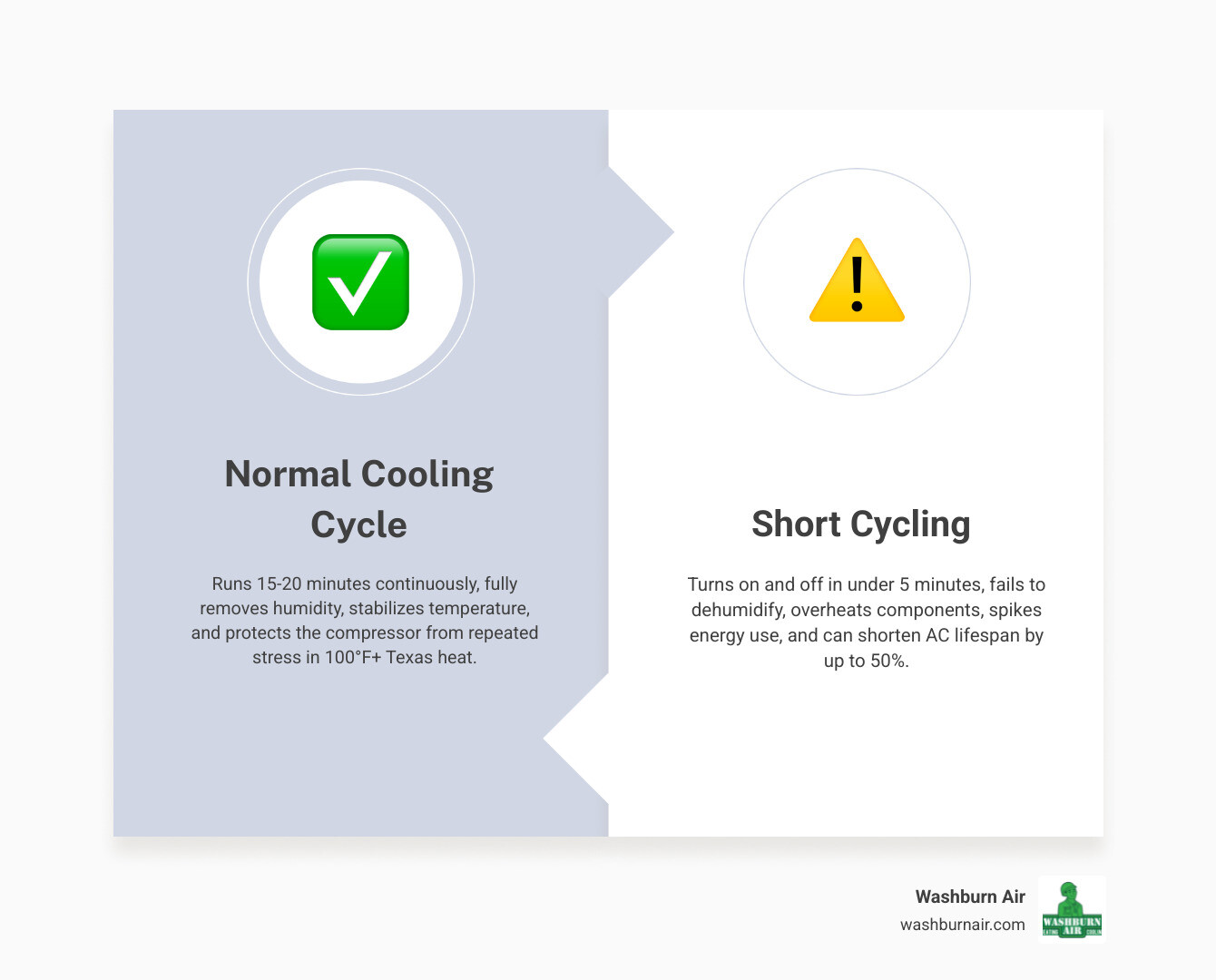
Short cycling is not just annoying. It can cut your AC system’s lifespan by up to 50% due to compressor wear, and it drives up your energy bills every time the system restarts. In DFW summers where temperatures regularly push past 100°F, a system that short cycles has almost no chance to catch up — and the damage compounds fast.
Understanding Short Cycling in Extreme Texas Weather

When the summer sun beats down on North Texas, your home’s HVAC system becomes its most critical line of defense. To understand why your system is behaving erratically, it helps to look at how a healthy unit operates under normal conditions.
In the middle of a typical heatwave, our systems are designed to run in steady, predictable patterns. However, when short cycling occurs, this rhythm breaks down completely. Instead of running for a sustained period to lower the temperature and pull moisture from the air, the system starts and stops constantly.
This rapid cycling places immense mechanical stress on your compressor—the heart of your air conditioner. The startup phase is when an AC draws the most electrical current and experiences the highest level of physical friction. When this happens dozens of times an hour, your utility bills skyrocket, and the system wears out prematurely. For more context on how local weather patterns dictate your system’s performance, explore our guide on Understanding HVAC Dallas Fort Worth Summer.
What Is a Normal Cooling Cycle?
Under normal operating conditions, a central air conditioner should run for approximately 15 to 20 minutes at a time to reach your thermostat’s target temperature. Once the setpoint is reached, the system shuts down and rests until the indoor temperature rises again.
During these 15-to-20-minute windows, the system is not just lowering the temperature; it is actively pulling humidity out of your indoor air. Liquid refrigerant circulating through the evaporator coils absorbs heat and moisture, which is then drained away. If your system runs for less than 10 minutes (or worse, only 2 to 5 minutes) before shutting down, it cannot dehumidify your living space. This leaves your home feeling sticky and clammy. To find the ideal balance between comfort and efficiency during these cycles, check out our recommendations on What AC Temperature in Summer?.
The Toll of Triple-Digit Heat on DFW HVAC Systems
When temperatures climb toward triple digits in Dallas, Fort Worth, or Arlington, your AC must work significantly harder to reject indoor heat to the scorching outdoors. This extreme heat load increases operating pressures inside the system.
If there is even a minor underlying issue—such as a small electrical weakness or a slight airflow restriction—the brutal outdoor heat will quickly expose and amplify it. The system will frequently trip its internal safety switches to prevent catastrophic failure, leading to the classic on-and-off cycling behavior. Catching these warning signs early can save you from a complete mid-summer breakdown. Learn more about identifying these issues in our article on Air Conditioner Repair Warning Signs.
AC Keeps Turning On and Off What Is Wrong in Texas Heat?
If your ac keeps turning on and off what is wrong in texas heat is currently your biggest headache, the issue usually stems from a handful of common mechanical, electrical, or airflow failures. Ignoring these warning signs can turn a simple fix into a major system failure. To understand the long-term consequences of leaving these issues unaddressed, read about The Impact of Neglecting AC Inspections and Repairs on Your System.
Here is a detailed breakdown of what is likely happening inside your system:
Airflow Restrictions: AC Keeps Turning On and Off What Is Wrong in Texas Heat
Airflow is the lifeblood of any HVAC system. When air cannot flow freely through your ductwork and coils, the system cannot exchange heat efficiently.
- Dirty Air Filters: A dirty air filter can reduce your AC’s operating efficiency by 5% to 15%. This restriction forces the system to work harder, trapping cold air inside the indoor unit.
- Frozen Evaporator Coils: When cold air is trapped because of a dirty filter or blocked vents, the temperature of the evaporator coil drops below freezing. Moisture on the coil turns to ice, blocking airflow entirely. The system then overheats or trips a safety switch, shutting down until the ice melts slightly, only to repeat the cycle.
- Clogged Condensate Drain: As your AC pulls moisture from the humid Texas air, that water must drain away safely. If the drain line clogs with algae or debris, a safety float switch will trip and shut down the system instantly to prevent water damage. To learn more about managing water issues in your system, read our guide on Why Your AC Is Leaking Water: How to Fix It.
Thermostat and Electrical Issues: AC Keeps Turning On and Off What Is Wrong in Texas Heat
Sometimes, the cooling components of your system are perfectly fine, but the electrical brains or controls are failing.
- Poor Thermostat Placement: If your thermostat is mounted in direct sunlight, near a drafty window, or close to a hot kitchen, it will register incorrect temperature readings. It may think the house has cooled down instantly when a draft hits it, causing the AC to shut off prematurely.
- Failing Capacitor: The capacitor acts like a short-term battery that delivers the electrical boost needed to start and run your compressor and fan motors. In extreme heat, capacitors are highly prone to failing. A weak capacitor can cause the compressor to struggle to stay running, leading to frequent electrical cutouts and short cycles.
- Loose or Damaged Wiring: Extreme heat and heavy electrical loads can cause wiring connections to expand and contract, loosening electrical terminals. This can lead to intermittent power interruptions that mimic short cycling.
Low Refrigerant Levels and Compressor Overheating
Refrigerant is the substance your system uses to carry heat out of your home. It does not get “used up” over time; if your refrigerant is low, you have a leak.
- Low Refrigerant Pressure: When refrigerant levels drop, the pressure inside the system fluctuates wildly. This triggers the low-pressure safety switch, which shuts down the compressor to prevent it from running dry and burning out. Once the pressures equalize, the switch resets, the system turns back on, and the cycle repeats.
- Compressor Overheating: Low refrigerant also means the compressor is not being properly cooled by the returning gas. Operating in triple-digit weather without sufficient cooling will cause the compressor to overheat rapidly, tripping its internal thermal overload switch. Because the compressor represents roughly 30% of all AC repair costs, protecting this component is vital. If you find yourself facing major repairs, check out our guide on Should I Repair or Replace My AC in North Texas?.
Oversized vs. Undersized Air Conditioners
System sizing is highly critical in North Texas. Homeowners often assume that “bigger is always better” when it comes to cooling, but this is a costly misconception.
An oversized air conditioner will blast your home with cold air, reaching the thermostat’s setpoint in just a few minutes. However, because it shuts down so quickly, it fails to remove humidity, leading to a home that feels cold but incredibly damp and sticky. Furthermore, this frequent starting and stopping increases energy consumption by 10% to 30% compared to a properly sized system.
An undersized air conditioner will struggle to keep up with the heat load, running continuously without reaching the setpoint, which can eventually lead to overheating and safety shutdowns.
| System Sizing Issue | Typical Cycle Behavior | Indoor Humidity Level | Energy Bill Impact | Component Wear |
|---|---|---|---|---|
| Oversized System | Short, rapid cycles (under 10 mins) | High (clammy, sticky air) | High (frequent startup power spikes) | Severe wear on compressor and starter parts |
| Undersized System | Runs continuously without stopping | Moderate to High | High (non-stop power draw) | Overheating motor and fan components |
| Correctly Sized System | Balanced cycles (15-20 mins) | Low (comfortable and dry) | Optimized (highly efficient) | Minimal, normal wear and tear |
Safe DIY Troubleshooting Steps for Homeowners
Before you pick up the phone to call for professional assistance, there are several safe, simple troubleshooting steps you can perform yourself to see if you can resolve the issue:
- Check and Replace the Air Filter: Turn off your HVAC system at the thermostat. Slide out your air filter and hold it up to a light source. If you cannot see light passing through it, replace it immediately with a fresh, clean filter.
- Inspect and Clear Your Supply and Return Vents: Walk through your home and make sure that no furniture, heavy drapes, or rugs are blocking your return air grilles or supply registers. Keep all interior doors open to maintain balanced airflow throughout the house.
- Verify Thermostat Settings and Batteries: Ensure your thermostat is set to “Cool” and the fan is set to “Auto” rather than “On.” If your thermostat has a low-battery indicator, replace the batteries with fresh, high-quality alkaline batteries to prevent communication dropouts.
- Clear Debris from the Outdoor Condenser Unit: Turn off the system breaker. Head outside and check your outdoor condenser unit. Ensure there are at least two feet of clear space around the unit. Gently clear away any overgrown weeds, grass clippings, leaves, or loose debris blocking airflow through the metal fins.
- Inspect the Condensate Drain Line: Look for the indoor evaporator unit (usually located in a closet or attic). Check the drain pan underneath it. If the pan is full of standing water, your drain line is clogged, and the safety switch has shut the unit down.
Regularly performing these basic checks is a great way to prepare your home for the summer. For a deeper dive into preventive steps, read Get Ready for the Heat: The Importance of an AC Tune-Up.
Frequently Asked Questions About AC Short Cycling
How often should my AC cycle on and off during a hot Texas summer day?
During a hot summer day in DFW, your air conditioner should typically run for 15 to 20 minutes per cycle, cycling on and off about two to three times per hour. When temperatures exceed 100°F, it is completely normal for your system to run longer, more continuous cycles to maintain your indoor comfort. However, if the system is cycling on and off every 2 to 7 minutes, it is experiencing short cycling and needs attention.
Can a dirty air filter really cause my air conditioner to turn off repeatedly?
Yes, absolutely. A heavily clogged air filter chokes off the airflow entering your system. Without enough warm air passing over the evaporator coils, the temperature of the coils drops rapidly, causing them to freeze over. This ice buildup blocks the remaining airflow, causing the system to overheat or trigger high-limit safety cutouts, shutting the system down repeatedly.
Is it safe to keep resetting my AC breaker if it trips during short cycling?
No, it is not safe. A circuit breaker is a safety device designed to protect your home from electrical fires and severe equipment damage. If your breaker trips once, you can safely reset it once to see if it was a temporary power surge. However, if it trips a second time, do not reset it again. Repeatedly resetting a tripped breaker can permanently destroy your compressor or cause electrical damage. In this scenario, shut the system off and schedule AC Repair immediately.
Conclusion
When your air conditioner starts short cycling in the middle of a brutal North Texas summer, time is of the essence. Ignoring the problem will not make it go away; instead, it will lead to higher energy bills, poor indoor humidity control, and a greatly reduced system lifespan.
At Washburn Air, we provide expert, 24/7 local HVAC support to homeowners across the Dallas-Fort Worth area—including Grapevine, Southlake, Westlake, Trophy Club, Highland Park, Irving, Arlington, Dallas, and Fort Worth. Our highly skilled technicians can quickly diagnose the root cause of your short cycling issues and restore reliable comfort to your home.
Whether you need a quick fix, routine AC Maintenance, or comprehensive HVAC Tune-Ups, we are here to help you beat the heat. Don’t let a failing AC ruin your summer comfort—Schedule professional AC Repair with Washburn Air today!
{“@context”: “https://schema.org”, “@graph”: [{“@type”: “Article”, “headline”: “AC Keeps Turning On and Off in Texas Heat | Washburn Air”, “description”: “AC keeps turning on and off what is wrong in Texas heat? Learn common short cycling causes and call Washburn Air for fast AC help.”, “author”: {“@type”: “Person”, “name”: “Washburn Air”}, “publisher”: {“@type”: “Organization”, “name”: “Washburn Air”, “logo”: {“@type”: “ImageObject”, “url”: “https://washburnair.com/wp-content/uploads/2024/09/washburn-air-logo-800-400×261.png”}}, “datePublished”: “2026-07-01T02:30:50+00:00”, “dateModified”: “2026-07-01T02:31:03.884631”, “mainEntityOfPage”: {“@type”: “WebPage”, “@id”: “https://washburnair.com/blog/how-to-diagnose-ac-short-cycling-in-texas-heat/”}, “image”: “https://images.pexels.com/photos/27134985/pexels-photo-27134985.jpeg?auto=compress&cs=tinysrgb&h=650&w=940”}, {“@type”: “FAQPage”, “mainEntity”: [{“@type”: “Question”, “name”: “Why does my AC keep turning on and off in Texas heat?”, “acceptedAnswer”: {“@type”: “Answer”, “text”: “An AC that keeps turning on and off is usually short cycling, meaning it shuts down before completing a full cooling cycle. Common causes in Texas heat include a dirty air filter, thermostat problems, low refrigerant, an oversized unit, electrical issues, frozen evaporator coils, a clogged condensate drain, or compressor overheating.”}}, {“@type”: “Question”, “name”: “What is AC short cycling?”, “acceptedAnswer”: {“@type”: “Answer”, “text”: “Short cycling happens when an air conditioner starts and stops repeatedly instead of running long enough to cool the home and remove moisture. In extreme Texas weather, this disrupts normal cooling patterns and puts heavy strain on the system.”}}, {“@type”: “Question”, “name”: “Can short cycling damage my AC system?”, “acceptedAnswer”: {“@type”: “Answer”, “text”: “Yes, short cycling can significantly damage an AC system because each restart creates high electrical demand and mechanical stress, especially on the compressor. The article states that short cycling can cut an AC system’s lifespan by up to 50% due to compressor wear.”}}, {“@type”: “Question”, “name”: “Why does short cycling increase energy bills?”, “acceptedAnswer”: {“@type”: “Answer”, “text”: “Short cycling increases energy bills because an AC draws the most electrical current during startup. When the system restarts repeatedly, it uses more energy and works inefficiently without properly cooling the home.”}}, {“@type”: “Question”, “name”: “Why is short cycling especially bad during DFW summers?”, “acceptedAnswer”: {“@type”: “Answer”, “text”: “In DFW summers, temperatures regularly push past 100°F, so a short-cycling AC has little chance to catch up with the cooling demand. The repeated stopping and starting causes damage to compound quickly under extreme heat load.”}}]}]}