Why Your AC Keeps Tripping the Breaker During a North Texas Heat Wave
If you’re wondering why does my AC keep tripping the breaker during a North Texas heat wave, here’s the short answer: your air conditioner is drawing more electricity than your circuit can safely handle. This happens more in North Texas than almost anywhere else because our summers push AC systems to their absolute limits — running longer, working harder, and stressing components that were already worn down from previous seasons.
The most common reasons your AC trips the breaker in North Texas heat are:
- Dirty air filter — restricts airflow, forces the system to work harder, and increases power draw
- Dirty condenser coils — trap heat in the outdoor unit, causing the compressor to overstrain
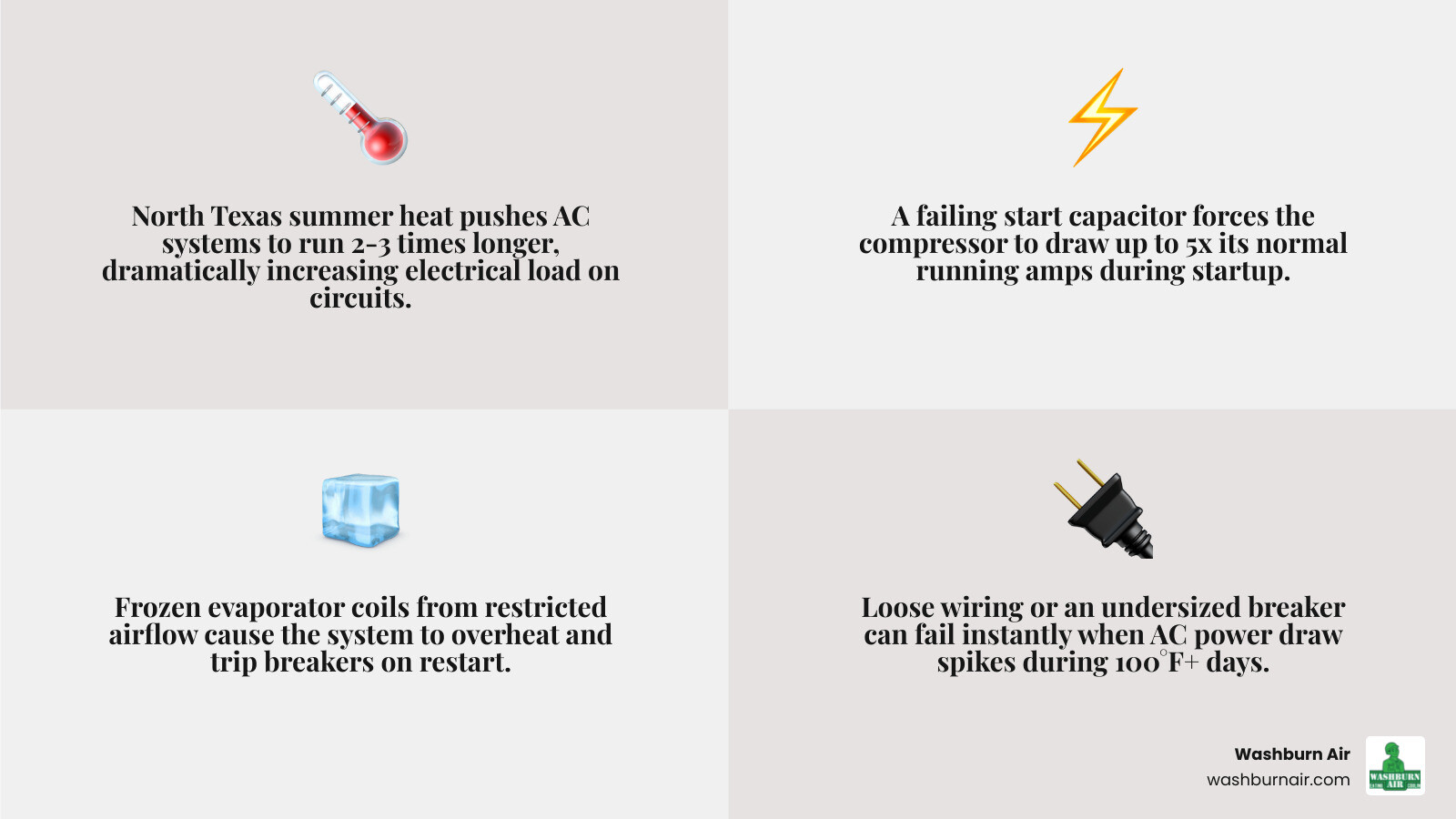
- Failing capacitor — struggles to start the compressor and fan motors, pulling excess current in the process
- Frozen evaporator coil — blocks airflow and creates dangerous electrical strain on restart
- Compressor drawing too much power — a hard-starting or failing compressor can exceed the breaker’s amperage limit
- Loose wiring or a faulty breaker — electrical faults in the system trigger the safety shutoff
- Wrong breaker size — an undersized breaker trips under normal AC load, especially in extreme heat
It’s 4:30 PM on a July Saturday. Your thermostat reads 87°F and climbing. You walk to the breaker panel for the third time today. Sound familiar? You’re not alone — about 1 in 4 emergency AC calls in North Texas turn out to be something a homeowner could have addressed in just a few minutes, like a tripped breaker or a clogged filter. But the other 3 out of 4 calls point to something that genuinely needs a trained technician before real damage sets in.
This guide will walk you through exactly what’s happening inside your electrical system when the heat hits triple digits, which causes are safe to check yourself, and when it’s time to put down the phone and call a pro.
The Science of Summer Strain: How Extreme Heat Overloads Your AC
To understand why your air conditioner is suddenly acting up, we have to look at how electricity and extreme heat interact.
A standard circuit breaker is not just a simple switch; it is a highly calibrated safety device designed to protect your home from electrical fires. Most residential breakers use a bimetallic strip that bends when it gets hot. Under normal conditions, the electrical current flowing through the breaker creates a small, safe amount of heat. However, if the current exceeds the breaker’s rated limit, the bimetallic strip bends far enough to release the spring-loaded latch, tripping the breaker and cutting off the power.
During a brutal North Texas heat wave in June 2026, two major factors push this thermal mechanism to its breaking point:
- High Ambient Panel Temperatures: Many homes in Arlington, Irving, and Grapevine have electrical panels located in unconditioned garages, utility closets, or even on the exterior south-facing walls of the house. When outdoor temperatures climb past 100°F, attic temperatures can easily exceed 130°F, and garage temperatures aren’t far behind. This extreme ambient heat “pre-warms” the bimetallic strip inside your breaker. Because the breaker is already hot from its environment, it takes far less electrical current to trip it than it would on a cool spring day.
- Increased Compressor Strain: As the outdoor temperature rises, the pressure inside your AC system’s refrigerant lines increases dramatically. The compressor motor has to push against this high pressure to circulate refrigerant and dump heat outside. This extra physical resistance causes the compressor to draw significantly more electrical current (amperage) to do its job.
When you combine a pre-warmed circuit breaker with a compressor drawing peak amperage to combat the Texas sun, you get the perfect storm for a tripped circuit. To learn more about how our local climate impacts your home’s cooling systems, check out our guide on Understanding HVAC Dallas Fort Worth Summer.
Why Does My AC Keep Tripping the Breaker During a North Texas Heat Wave?
When your AC trips the breaker, it is pulling a level of power draw that the electrical panel cannot safely support. This electrical spike generally falls into one of two categories:
- Inrush Current (Startup Surge): When your AC compressor first starts up, it requires a massive, split-second burst of electricity to get the motor spinning. This is called inrush current. If a motor component is weak or the compressor is struggling to start, this startup surge can instantly peak above the breaker’s safety threshold, causing an immediate trip.
- Sustained Overload: If your AC starts fine but trips the breaker after running for 10 to 30 minutes, you are dealing with a sustained overload. This means the system is steadily drawing slightly more amperage than the circuit is rated for, slowly heating up the breaker until it eventually trips.
If your system is repeatedly shutting down, continuing to reset the breaker can cause permanent damage to your compressor or even melt the wiring inside your electrical panel. Professional AC Repair is often required to isolate the exact component drawing excess current.
To help you diagnose the pattern you’re seeing at home, here is a breakdown of what the timing of your breaker trips typically means:
| Tripping Pattern | What It Usually Indicates | Most Common Root Cause |
|---|---|---|
| Trips immediately (within 1–5 seconds of startup) | Direct electrical short, grounded compressor, or completely dead capacitor. | Electrical short circuit or a seized compressor motor. |
| Trips after 5–15 minutes of running | Overheating, high system pressure, or a failing run capacitor that cannot maintain smooth motor operation. | Weak capacitor, dirty condenser coils, or low refrigerant. |
| Trips after 30+ minutes of running | Sustained thermal overload. The system is working too hard for too long, slowly heating up the breaker. | Clogged air filter, frozen evaporator coils, or a weak, aging circuit breaker. |
Airflow Restrictions: Why Does My AC Keep Tripping the Breaker During a North Texas Heat Wave?
Airflow is the lifeblood of your air conditioning system. When airflow is restricted, your AC has to work twice as hard to move heat out of your home, forcing the blower motor and compressor to draw dangerous levels of electricity.
- Dirty Air Filters: This is the most common, easily fixable culprit. In Dallas and Fort Worth summers, heavy AC usage means filters can clog with dust, pet dander, and pollen in as little as 30 to 60 days. A clogged filter starves the blower motor of air, causing the motor to overheat and draw excess amperage until the breaker trips.
- Frozen Evaporator Coils: When airflow is severely restricted by a dirty filter or closed registers, the temperature of the indoor evaporator coil drops below freezing. Moisture on the coil turns to ice, completely blocking air passage. If your system is frozen, you might also notice water pooling around your indoor unit. To understand how to handle this, read our article on Why Your AC Is Leaking Water: How to Fix It.
- Dirty Condenser Coils: Your outdoor unit’s condenser coils are exposed to grass clippings, dirt, pollen, and DFW dust. If these coils are coated in grime, they cannot efficiently release heat into the outdoor air. The compressor has to run at much higher pressures and temperatures to compensate, leading to massive power draw.
Electrical Component Failures: Why Does My AC Keep Tripping the Breaker During a North Texas Heat Wave?
If your airflow is perfectly fine but you’re still asking why does my AC keep tripping the breaker during a North Texas heat wave, the problem is likely a failing electrical component inside the outdoor cabinet.
- Failing Capacitor: The capacitor is a small, cylindrical device that acts like a temporary battery, delivering the electrical boost needed to start and run the compressor and fan motors. In North Texas, extreme summer heat degrades capacitors rapidly. In fact, capacitor failures account for approximately 35% of emergency AC repair calls during our summer heat waves. When a capacitor weakens, the compressor struggles to stay in sync, drawing massive amounts of current until the breaker trips.
- Bad Contactor: The contactor is an electrical switch that closes when your thermostat calls for cooling, sending 240-volt power to the compressor and fan. Over time, the silver coating on the contactor points can wear down, causing “pitting” or electrical arcing. This resistance generates intense heat and can trip the breaker.
- Compressor Problems (Hard Starting or Grounding): The compressor is the heart of your AC. As it ages, its internal motor windings can break down. If the electrical windings make direct contact with the metal frame of the compressor, it creates a “ground fault” (short circuit), which will instantly trip your breaker the millisecond the unit tries to start.
If you suspect your system is suffering from a mechanical or electrical failure, look out for the signs detailed in our guide on Air Conditioner Repair Warning Signs.
Wiring and Panel Issues
Sometimes, the root cause of your AC breaker tripping isn’t the air conditioner at all — it’s your home’s electrical infrastructure.
- Loose Electrical Connections: Extreme heat causes copper and aluminum wires to expand and contract. Over years of DFW summer cycles, this thermal movement can slowly loosen screw terminals inside your outdoor disconnect box or main electrical panel. Loose connections create electrical resistance, which generates localized heat and causes the breaker to trip.
- Weak or Faulty Circuit Breakers: Circuit breakers do not last forever. An aging breaker that has tripped repeatedly in the past will become weak, losing its internal tension and tripping at lower amperage levels than it is rated for.
- Wrong Breaker Size: If your AC system was recently replaced but the installer failed to verify the electrical panel requirements, you might have an undersized breaker. An AC unit requiring a 40-amp circuit running on a 30-amp breaker will trip almost immediately under heavy summer loads.
Safe Homeowner Troubleshooting Steps Before Calling a Tech
Before you pick up the phone to schedule an emergency service call, there are a few simple, safe checks you can perform. Remember: about 25% of emergency calls in North Texas are simple issues that homeowners can resolve themselves.
- Turn the System Off at the Thermostat: Never try to reset a tripped breaker while the thermostat is still actively calling for cooling. Turn the thermostat to “OFF” first.
- Inspect and Replace the Air Filter: Pull out your indoor air filter. If you cannot see light through it, replace it immediately.
- Verify Outdoor Clearance: Walk outside to your condenser unit. Make sure there are at least 2 to 3 feet of clear space around the unit. Clear away any overgrown weeds, grass clippings, or windblown trash blocking the metal grilles.
- Check the Condensate Drain Line and Float Switch: If your drain line is clogged with algae, the safety float switch will cut power to your system. Check your indoor unit to ensure no water is backing up.
- Reset the Breaker Safely (Once): Go to your electrical panel. Locate the double-pole breaker labeled “AC” or “Compressor.” It will likely be sitting in the middle “tripped” position. Push it firmly to the “OFF” position until you hear a distinct click, then flip it back to “ON.”
- Turn the Thermostat Back On: Set your thermostat back to “COOL” and set a reasonable target temperature. To avoid putting immediate, extreme strain on your system, read our advice on What AC Temperature in Summer is both safe and efficient.
If the system starts up and runs smoothly without tripping again, keep a close eye on it. If it trips a second time, do not reset it again.
When to Stop Troubleshooting and Call a Professional
There is a very clear line between safe homeowner maintenance and dangerous electrical troubleshooting. If your initial checks do not resolve the issue, it is time to call in the professionals.
You should immediately stop troubleshooting and call an HVAC or electrical specialist if you experience any of the following:
- The Breaker Trips Immediately on Reset: If the breaker snaps back to the tripped position the moment you flip it on, you have a direct short circuit or a grounded compressor. Continuing to force the breaker on can cause severe electrical arcs and fire hazards.
- You Smell Burning or Electrical Odors: A distinct plastic-burning or sulfur-like smell coming from your indoor air handler, outdoor unit, or electrical panel indicates melting wire insulation or a failing motor. Turn off all power immediately.
- The Outdoor Unit Hums but Won’t Start: If you hear a loud buzzing or humming sound from your outdoor unit but the fan or compressor isn’t spinning, you likely have a dead capacitor or a seized motor. Running the unit in this state will quickly overheat the compressor, leading to catastrophic damage.
- Sparking or Visible Damage: Any signs of soot, scorch marks, or melted plastic inside your outdoor disconnect box or electrical panel are clear indicators of a dangerous electrical fault.
For safe, reliable diagnostics, contact our experienced team for comprehensive HVAC Services.
Preventive Measures: Protecting Your System from Future Heat Waves
The best way to handle a tripped breaker during a heat wave is to prevent it from happening in the first place. Taking proactive steps in the spring can save you from a miserable, hot afternoon waiting for emergency repairs.
- Install a Soft Starter: A soft starter is an excellent upgrade for North Texas homes. It reduces the initial startup inrush current of your compressor by up to 70%, allowing your AC to start up smoothly without creating a massive electrical surge that trips older breakers.
- Add Whole-Home or HVAC-Specific Surge Protection: DFW is prone to severe summer storms and grid fluctuations. A dedicated surge protector installed at your outdoor disconnect box protects your sensitive AC compressor and control boards from voltage spikes.
- Schedule Annual Spring Tune-Ups: Having a professional clean your condenser coils, test your capacitors under load, tighten all electrical connections, and check refrigerant levels before the summer heat hits will catch 80% of potential breaker-tripping issues. Explore our AC Maintenance plans and schedule your yearly HVAC Tune-Ups to keep your system running reliably all year long.
Frequently Asked Questions About AC Breaker Trips
Is it safe to reset my AC breaker more than once?
No, it is not safe to repeatedly reset a tripped AC breaker. The breaker trips because it detected a dangerous electrical overload or short circuit. Forcing it to reset multiple times can overheat the wires inside your walls, melt electrical connections, ruin your compressor motor, and significantly increase the risk of a residential electrical fire. If it trips once, you can reset it. If it trips again, keep it off and call a professional.
Why does my AC breaker trip immediately versus after running for 30 minutes?
An immediate trip (within seconds of startup) points to a direct electrical short circuit, a grounded compressor, or a completely shorted capacitor. A delayed trip (after 15 to 30 minutes) indicates a sustained thermal overload, which is usually caused by restricted airflow (dirty filters), extremely dirty condenser coils, low refrigerant, or a weak circuit breaker that is overheating in the summer sun.
Can a dirty air filter really cause my circuit breaker to trip?
Yes, absolutely. A dirty air filter restricts the volume of air flowing over your indoor evaporator coil. This forces the blower motor to work much harder to push air through the clogged filter, causing the motor to draw more electrical current. Additionally, restricted airflow can cause the evaporator coil to freeze into a solid block of ice, which strains the compressor and eventually forces the entire system to draw enough excess amperage to trip the breaker.
Conclusion
A tripped circuit breaker during a North Texas heat wave is more than just an inconvenience — it’s your home’s electrical safety system working exactly as designed to prevent a disaster. While a simple filter swap or clearing away brush from your outdoor unit can sometimes save the day, recurring trips are a clear warning sign that your cooling system is under dangerous stress.
At Washburn Air, we provide expert, honest, and reliable heating and cooling solutions across the entire Dallas-Fort Worth metroplex. Whether you are located in Grapevine, Southlake, Westlake, Trophy Club, Colleyville, Keller, or Highland Park, our team of highly trained technicians is ready to diagnose and resolve your electrical and cooling issues safely.
Don’t spend another uncomfortable hour in the Texas heat. Contact Washburn Air today for fast, professional AC Repair and keep your home cool and safe all summer long.
{“@context”: “https://schema.org”, “@graph”: [{“@type”: “Article”, “headline”: “AC Tripping Breaker in North Texas Heat | Washburn Air”, “description”: “Wondering why does my AC keep tripping the breaker during a North Texas heat wave? Learn safe checks and call Washburn Air today.”, “author”: {“@type”: “Person”, “name”: “Washburn Air”}, “publisher”: {“@type”: “Organization”, “name”: “Washburn Air”, “logo”: {“@type”: “ImageObject”, “url”: “https://washburnair.com/wp-content/uploads/2024/09/washburn-air-logo-800-400×261.png”}}, “datePublished”: “2026-06-26T17:30:33+00:00”, “dateModified”: “2026-06-26T17:30:47.072238”, “mainEntityOfPage”: {“@type”: “WebPage”, “@id”: “https://washburnair.com/blog/how-to-fix-ac-breaker-trips-in-north-texas-heat-waves/”}, “image”: “https://images.pexels.com/photos/32497160/pexels-photo-32497160.jpeg?auto=compress&cs=tinysrgb&h=650&w=940”}, {“@type”: “FAQPage”, “mainEntity”: [{“@type”: “Question”, “name”: “Why does my AC keep tripping the breaker during a North Texas heat wave?”, “acceptedAnswer”: {“@type”: “Answer”, “text”: “Your AC is likely drawing more electricity than the circuit can safely handle. North Texas heat makes this more common because air conditioners run longer, work harder, and place extra stress on worn components.”}}, {“@type”: “Question”, “name”: “What are the most common reasons an AC trips the breaker in extreme heat?”, “acceptedAnswer”: {“@type”: “Answer”, “text”: “Common causes include a dirty air filter, dirty condenser coils, a failing capacitor, a frozen evaporator coil, a compressor drawing too much power, loose wiring, a faulty breaker, or the wrong breaker size. Each of these problems can increase electrical strain and trigger the breaker’s safety shutoff.”}}, {“@type”: “Question”, “name”: “Can a dirty air filter cause my AC breaker to trip?”, “acceptedAnswer”: {“@type”: “Answer”, “text”: “Yes. A dirty air filter restricts airflow, which forces the AC system to work harder and can increase the amount of electricity it draws.”}}, {“@type”: “Question”, “name”: “When should I call a technician for an AC that keeps tripping the breaker?”, “acceptedAnswer”: {“@type”: “Answer”, “text”: “You should call a trained technician if the problem is not something simple like a tripped breaker or clogged filter. The article notes that most emergency AC calls involve issues that need professional attention before real damage occurs.”}}, {“@type”: “Question”, “name”: “How does a circuit breaker protect my home when my AC overloads the circuit?”, “acceptedAnswer”: {“@type”: “Answer”, “text”: “A circuit breaker is a calibrated safety device designed to protect your home from electrical fires. When excessive current creates too much heat, the breaker trips to shut off power before the circuit becomes unsafe.”}}]}]}