Why Your AC Running Constantly in North Texas Heat Is More Than Just the Weather
If you’ve noticed your ac running constantly in north texas heat, you’re in good company — and you’re right to wonder whether something is wrong. During a Dallas-Fort Worth summer, when afternoon temperatures regularly climb past 100°F, your air conditioner works harder than almost any system in your home. But there’s a real difference between an AC that runs long because the heat demands it, and one that runs nonstop because something is broken or inefficient.
Here’s a quick breakdown of what’s likely going on:
Is your AC running constantly? Here’s what it usually means:
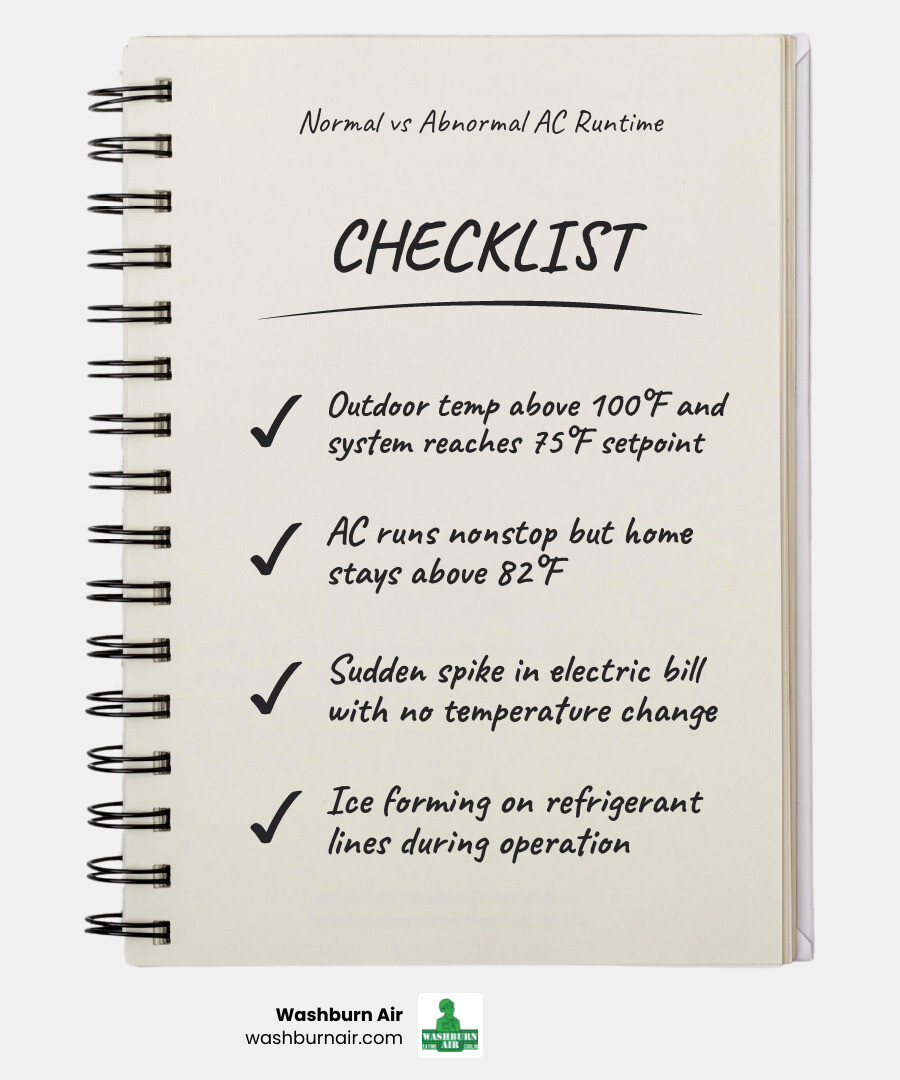
- Outdoor temps above 95–100°F — Long or continuous runtime can be normal if your home is still reaching your thermostat setpoint
- Home never reaches the set temperature — This is a red flag, not normal operation
- Uneven cooling or warm rooms — Points to airflow, duct, or equipment issues
- Sudden spike in energy bills — Suggests a loss in efficiency, not just summer heat
- Ice on refrigerant lines or the indoor unit — Requires immediate attention
- System running nonstop on mild days (below 90°F) — Almost always indicates a problem
The key question isn’t just how long your AC runs — it’s whether it’s actually keeping up. A system that runs 70–80% of the time on a 102°F afternoon but keeps your home at 75°F is doing its job. A system that runs all day and still can’t get below 82°F is telling you something is wrong.
In North Texas homes, the culprits range from something as simple as a clogged air filter to bigger issues like duct leaks, low refrigerant, or an aging system pushed past its limits. According to industry data, the average DFW home loses 20–30% of its cooled air to duct leaks alone — meaning your AC could be working overtime just to compensate for air escaping into a 130°F attic.
This guide walks you through how to tell normal from abnormal, what’s most likely causing the problem, and when it’s time to call a professional.
Is It Normal to Experience an AC Running Constantly in North Texas Heat?
When the summer sun beats down on Grapevine, Southlake, Highland Park, or Fort Worth, it can feel like your home is sitting inside a giant oven. During these peak summer stretches, it is incredibly common to hear your outdoor condenser humming along for hours at a time. But is this actually normal?
To understand how your system behaves under pressure, we have to look at how air conditioners are engineered. HVAC systems are built around what is known as the “20-degree rule.” This engineering standard means that under normal operating conditions, a properly sized air conditioner is designed to lower the indoor air temperature by about 15 to 20 degrees compared to the outdoor temperature.
When we hit a typical July or August heatwave with outdoor temperatures soaring to 103°F, your system is technically designed to maintain an indoor environment of around 83°F. If you have your thermostat setpoint at 72°F on a triple-digit afternoon, your system is being asked to perform far beyond its standard design parameters. To learn more about how our local climate impacts your home comfort systems, check out our guide on Understanding HVAC in Dallas Fort Worth Summer.
Because of these extreme design thresholds, continuous operation during the hottest hours of the day (usually between 2:00 PM and 7:00 PM) can actually be normal behavior—provided your home is comfortable and eventually hits your target setpoint once the sun goes down.
To help you distinguish between a hardworking system and a failing one, we’ve put together this quick comparison table:
| System Behavior | Normal Summer Operation | Abnormal / Problematic Operation |
|---|---|---|
| Thermostat Setpoint | Eventually met, especially in the evening | Never met; house stays warm or humid |
| Air Temperature | Cool, crisp air blowing consistently from vents | Lukewarm, weak, or warm air blowing |
| Cycling Pattern | Long cycles during the day, normal cycling at night | Runs 24/7 without stopping, even on mild days |
| System Condition | Clean coils, dry refrigerant lines | Ice on lines, frozen indoor coil, water leaks |
| Indoor Humidity | Comfortable and controlled (around 50% RH) | Sticky, muggy, or damp feeling indoors |
When Constant Runtime Is Normal During Triple-Digit Days
During peak heatwaves in Arlington or Irving, your home experiences a massive peak solar load. The sun radiates heat directly through your roof, walls, and west-facing windows. This thermal energy builds up inside your structure, forcing your air conditioner to run continuous cycles just to keep the indoor temperature stable.
If your system runs for several hours straight on a 100°F afternoon but manages to keep your living room at a comfortable 75°F, it is performing exactly as it should. The continuous operation keeps the indoor humidity low and prevents the home from warming up. In this scenario, turning the system off or raising the thermostat too high during the day can actually make it harder for the AC to catch up later, as the heat becomes deeply embedded in your walls, furniture, and flooring.
Warning Signs That an AC Running Constantly in North Texas Heat Indicates a Problem
While long runtimes can be a natural response to extreme heat, there are clear boundaries where normal operation ends and a system malfunction begins. If your air conditioner is running nonstop but fails to cool your home, you are likely dealing with an underlying mechanical or structural issue.
Keep an eye out for these key indicators:
- The house never reaches the setpoint: If your thermostat is set to 74°F but the indoor temperature reads 81°F all day and night, your system is struggling.
- Uneven cooling: Some rooms feel like iceboxes while upstairs bedrooms or south-facing rooms remain completely unusable.
- Warm or lukewarm air: The air coming out of your supply registers does not feel cold to the touch.
- Rising energy bills: A sudden, unexplained spike in your monthly utility bill often indicates a severe drop in operating efficiency.
If you notice any of these symptoms, it is highly recommended to review the common Air Conditioner Repair Warning Signs to catch issues before they turn into a complete mid-summer breakdown.
Common Causes of Nonstop AC Runtime in DFW Homes
When an air conditioner runs without a break, it is usually because the cooling capacity has dropped or the heat load entering the home has increased. Understanding the root causes can help you determine whether you need a quick maintenance fix or a professional diagnostic visit. For a comprehensive look at typical system failures, explore our breakdown of Common AC Issues and How to Troubleshoot Them Effectively.
Here are the most common mechanical and environmental culprits behind nonstop runtime:
- Dirty Condenser Coils: Your outdoor unit’s coils release the heat collected from inside your home. When these coils get coated in North Texas dust, pollen, and lawn debris, they act like an insulating blanket. This slows down heat transfer, forcing the system to run much longer to cool your home.
- Low Refrigerant Levels: Refrigerant is the lifeblood of your AC. Because air conditioners are closed-loop systems, they should never “lose” refrigerant. If levels are low, it always indicates a leak. Low refrigerant reduces the system’s cooling capacity, meaning it must run continuously to try and meet your thermostat demands.
- Thermostat Misplacement: If your thermostat is installed in a drafty area, near a heat-generating appliance, or in direct sunlight, it will read the temperature as much warmer than the rest of the house, causing the system to run endlessly.
- System Age: Most air conditioning systems in North Texas last about 12 to 15 years—slightly below the national average due to the intense summer workload. As a system ages, its mechanical components wear down, making it less efficient and forcing longer runtimes.
Restricted Airflow and Clogged Air Filters
The single most common cause of an ac running constantly in north texas heat is restricted airflow, and it almost always starts with a clogged air filter.
When your air filter is packed with dust, pet hair, and airborne particles, it restricts the volume of air entering your system. This forces the blower motor to work significantly harder, putting immense stress on the electrical components. With less air flowing over your indoor evaporator coil, the heat transfer process slows to a crawl, causing the system to run indefinitely to achieve the same cooling effect.
Furthermore, using an air filter with an excessively high MERV rating can actually mimic a clogged filter. While high-efficiency filters are great for indoor air quality, they can restrict airflow if your system’s fan motor isn’t designed to handle the resistance. We recommend checking your filter every 30 days during the peak summer months of June, July, and August, replacing it promptly to keep your system breathing easily.
How Attic Insulation and Duct Leaks Cause an AC Running Constantly in North Texas Heat
In many DFW homes, the real reason your AC runs constantly isn’t actually the cooling equipment—it’s the house itself.
During a typical summer afternoon, attic temperatures in Westlake, Trophy Club, or Dallas can easily climb past 130°F. If your attic lacks sufficient insulation or has a low R-value, that extreme heat radiates directly down through your ceilings and into your living spaces. Upgrading your attic insulation can reduce your summer cooling bills by 10% to 20%, dramatically reducing the workload on your air conditioner.

Even worse, the average home in North Texas loses 20% to 30% of its cooled air to duct leaks. Because many local homes feature ductwork running through unconditioned attic spaces, any crack, loose connection, or tear in the ducts allows precious cold air to escape directly into the scorching attic. At the same time, the negative pressure pulls superheated attic air and dust into your living spaces. This constant air infiltration forces your air conditioner to run nonstop just to combat the hot air leaking into your home.
DIY Troubleshooting Steps for Homeowners Before Calling a Professional
Before you pick up the phone to schedule an emergency service call, there are several quick, safe DIY troubleshooting steps you can perform to see if you can resolve the issue yourself.
Here is a quick checklist of steps to take:
- Check the Thermostat Settings: Ensure your thermostat is set to “COOL” and the fan setting is on “AUTO” rather than “ON.” When the fan is set to “ON,” the blower motor runs continuously even when the cooling cycles have finished, which can make it seem like your AC never stops.
- Inspect the Air Filter: Pull out your indoor air filter and hold it up to a light source. If light cannot easily pass through the fibers, replace it immediately.
- Clear Outdoor Unit Clearance: Walk outside and inspect your outdoor condenser unit. Ensure there is at least two feet of clear space around the entire perimeter. Trim back any overgrown bushes, weeds, or vines, and clear away grass clippings or leaves that may be blocking the metal grates.
- Verify Supply Vents Are Open: Walk through your home and make sure all supply registers and return grates are completely open and unobstructed by furniture, heavy curtains, or rugs. Closing vents in unused rooms does not save energy; instead, it disrupts system pressure and restricts vital airflow.
- Look for Water Leaks: Check the condensate drain line near your indoor unit. If you notice standing water or signs of an active leak, your system’s safety float switch may be close to shutting the system down. Learn more about how to address this issue by reading about Why Your AC Is Leaking Water & How to Fix It.
The Risks of Ignoring a Constantly Running Air Conditioner
It can be tempting to ignore a constantly running air conditioner as long as the house feels relatively cool. However, allowing a system to run 24/7 without a break carries serious risks that can lead to expensive repairs or a total system failure when you need it most.
When an AC runs nonstop, the indoor evaporator coil can drop below freezing temperatures. Without proper airflow or sufficient refrigerant to balance the heat transfer, moisture in the air condenses on the coil and quickly turns to ice. Once frozen evaporator coils occur, they completely block airflow, causing the system to blow warm air and potentially sending liquid refrigerant back to the compressor—which can instantly destroy it.
Additionally, continuous operation places immense thermal and mechanical stress on your system’s most expensive components. The compressor and blower motor run hot, increasing the risk of electrical burnout. Essential electrical parts like capacitors and contactors degrade much faster under constant loads, leading to sudden afternoon breakdowns.
To understand the long-term consequences of skipping routine care, read about The Impact of Neglecting AC Inspections and Repairs on Your System.
When to Call for Professional AC Repair or Replacement
If you have completed the basic DIY checks and your air conditioner continues to run nonstop without cooling your home, it is time to call in the professionals. Attempting to diagnose complex issues like refrigerant leaks or electrical failures without proper training and EPA certification can be dangerous and may void your equipment warranties.
When our professional technicians visit your home, we don’t just guess at the solution. If a system replacement is needed, we perform a comprehensive Manual J load calculation. This engineering-based assessment takes into account your home’s exact square footage, insulation levels, window orientations, ductwork design, and local North Texas climate data to determine the precise system size your home requires.
Sizing is critical: an oversized system will short-cycle and fail to dehumidify, while an undersized system will run constantly and wear itself out prematurely. If you are trying to decide whether to keep patching up your current unit or invest in a modern, high-SEER system, our guide on Should I Repair or Replace My AC in North Texas? can help you weigh your options. You can also explore our professional installation options directly on our AC Replacement page.
Frequently Asked Questions About Texas AC Performance
Why does my AC work fine at night but struggle during the afternoon?
This is primarily due to the intense solar radiation and thermal load your home experiences during the day. In the afternoon, the temperature differential between the scorching outdoor air and your desired indoor temperature is at its highest. Once the sun sets, the outdoor temperature drops, the solar load disappears, and your system can easily shed heat, allowing it to cycle normally.
Can a dirty air filter really cause my AC to run nonstop?
Yes, absolutely. A dirty air filter is the number one cause of system issues in North Texas. It severely restricts airflow, which starves the evaporator coil of the warm indoor air it needs to function. This causes the coil temperature to plummet, leading to evaporator coil icing, restricted airflow, and immense system strain that forces the unit to run continuously.
How does high indoor humidity affect my system’s runtime?
Your air conditioner has two jobs: lowering the air temperature (sensible cooling) and removing moisture from the air (latent cooling). When indoor humidity is high, your system must dedicate a massive amount of energy to condensing water vapor out of the air before it can effectively lower the temperature. This added moisture load extends your system’s runtime significantly. If you are experiencing water leaks from this heavy condensation, check out Why Your AC Is Leaking Water & How to Fix It for practical advice.
Conclusion
An ac running constantly in north texas heat is a clear signal that your system is working under extreme stress. While our intense triple-digit summers naturally demand longer cooling cycles, a system that runs 24/7 without reaching your thermostat setpoint or keeping you comfortable needs professional attention. From simple air filter replacements to sealing leaky ductwork in a hot attic, taking proactive steps now can save you from a major breakdown during the hottest days of the year.
At Washburn Air, we are your local Grapevine HVAC experts, proudly serving homeowners across Dallas, Fort Worth, Arlington, Irving, Grapevine, Southlake, Westlake, Trophy Club, and Highland Park. Our team is dedicated to providing honest, diagnostic-first solutions to keep your home cool and comfortable all summer long.
Don’t wait for a minor efficiency issue to turn into a costly emergency. Contact us today to schedule your professional AC Repair or sign up for one of our preventative HVAC Maintenance Plans to ensure your system is ready to conquer the Texas heat!
{“@context”: “https://schema.org”, “@graph”: [{“@type”: “Article”, “headline”: “AC Running Constantly in North Texas Heat | Washburn Air”, “description”: “Is your AC running constantly in North Texas heat? Learn common causes, warning signs, and when to call Washburn Air for expert help.”, “author”: {“@type”: “Person”, “name”: “Washburn Air”}, “publisher”: {“@type”: “Organization”, “name”: “Washburn Air”, “logo”: {“@type”: “ImageObject”, “url”: “https://washburnair.com/wp-content/uploads/2024/09/washburn-air-logo-800-400×261.png”}}, “datePublished”: “2026-07-06T02:30:49+00:00”, “dateModified”: “2026-07-06T02:31:08.379946”, “mainEntityOfPage”: {“@type”: “WebPage”, “@id”: “https://washburnair.com/blog/how-to-fix-ac-running-constantly-in-north-texas-heat/”}, “image”: “https://images.pexels.com/photos/36202186/pexels-photo-36202186.jpeg?auto=compress&cs=tinysrgb&h=650&w=940”}, {“@type”: “FAQPage”, “mainEntity”: [{“@type”: “Question”, “name”: “Is it normal for my AC to run constantly in North Texas heat?”, “acceptedAnswer”: {“@type”: “Answer”, “text”: “It can be normal for an AC to run for long periods during Dallas-Fort Worth summer afternoons above 95–100°F, especially if it is still reaching the thermostat setpoint. For example, a system running 70–80% of the time on a 102°F day while keeping the home at 75°F is generally doing its job.”}}, {“@type”: “Question”, “name”: “When is a constantly running AC a sign of a problem?”, “acceptedAnswer”: {“@type”: “Answer”, “text”: “A constantly running AC is a red flag if the home never reaches the set temperature, rooms are unevenly cooled, energy bills suddenly spike, ice appears on refrigerant lines or the indoor unit, or the system runs nonstop on mild days below 90°F. These signs suggest something beyond normal summer heat may be wrong.”}}, {“@type”: “Question”, “name”: “Why won’t my AC cool my house below the thermostat setting?”, “acceptedAnswer”: {“@type”: “Answer”, “text”: “If your AC runs all day but still cannot reach the set temperature, the article says this is not normal operation. Possible causes include a clogged air filter, duct leaks, low refrigerant, airflow problems, equipment issues, or an aging system that is being pushed past its limits.”}}, {“@type”: “Question”, “name”: “Can duct leaks make my AC run nonstop in North Texas?”, “acceptedAnswer”: {“@type”: “Answer”, “text”: “Yes. The article states that the average DFW home loses 20–30% of its cooled air to duct leaks, which can force the AC to work overtime as cooled air escapes into very hot attic spaces.”}}, {“@type”: “Question”, “name”: “What is the most important sign to watch when my AC runs constantly?”, “acceptedAnswer”: {“@type”: “Answer”, “text”: “The key issue is not just how long the AC runs, but whether it is actually keeping up with cooling demand. If it runs continuously and still cannot maintain the desired indoor temperature, that indicates a likely problem.”}}]}]}