Why Your Mini Split Stops Cooling During a North Texas Heat Wave
If you’re wondering why is my mini split not cooling during a North Texas heat wave, you’re not alone — and the answer is usually one of a handful of fixable problems.
Quick Answer: Most Common Reasons Your Mini Split Isn’t Cooling in North Texas
- Wrong thermostat or remote settings — Unit is in fan, heat, or dry mode instead of cool mode
- Dirty or clogged air filter — Restricted airflow causes poor cooling or a frozen coil
- Blocked outdoor condenser — Debris or insufficient clearance prevents heat rejection
- Frozen evaporator coil — Caused by airflow restriction or low refrigerant
- Low refrigerant from a leak — Always requires a licensed technician to repair
- Outdoor unit overheating — Extreme ambient temperatures push the system past its limits
- Electrical failure — A bad capacitor, tripped breaker, or failing compressor
North Texas summers are brutally hard on cooling equipment. When outdoor temperatures climb past 100°F for days on end — and attic temperatures can exceed 130°F — even a well-maintained mini split is working at the edge of its design limits. Any weakness in the system, whether it’s a clogged filter, a slow refrigerant leak, or a dusty condenser coil, can tip the whole thing over into a failure at the worst possible moment.
The good news: many of the most common causes are things you can check yourself in under 30 minutes. The steps below walk you through exactly what to look for — and when it’s time to stop DIYing and call a pro.
Why Is My Mini Split Not Cooling During a North Texas Heat Wave?
When the summer sun beats down on communities like Grapevine, Southlake, and Fort Worth, our homes become fortresses against triple-digit heat. Ductless mini-split systems are highly efficient and incredibly reliable, but they are not immune to the extreme atmospheric pressure of a Texas summer.
When your system fails to keep up, it is usually because the physical limits of heat transfer have been reached or a mechanical component has buckled under the strain. If you are experiencing a complete cooling loss, you may need a professional AC Repair to restore comfort before indoor temperatures reach dangerous levels.
Environmental Factors: Extreme Texas Heat and Attic Temperatures
The climate in North Texas presents a unique challenge for air conditioners. We do not just get “warm” weather; we experience sustained, multi-week stretches of 100°F+ days. While your mini-split indoor air handler is mounted safely inside your living space, its performance is directly tied to the outdoor environment.
The outdoor condenser unit must release the heat it absorbed from your indoor air into the scorching outdoor environment. If the air surrounding that unit is already 105°F, heat transfer slows down significantly. Furthermore, in homes where mini-split refrigerant lines run through unconditioned attics or along exterior walls facing west, those lines are subjected to temperatures exceeding 130°F. This massive thermal load can degrade system efficiency and expose minor issues that would go unnoticed in milder weather. If your system is older, you might find yourself asking: Should I Repair or Replace My AC in North Texas? to survive these brutal seasonal spikes.
System Limits: The 20-Degree Rule and Design Temperatures
In the HVAC industry, systems are sized based on local design temperatures. In North Texas, the design temperature is typically set around 98°F to 100°F. This means your mini-split is engineered to maintain a comfortable indoor temperature (such as 75°F) when it is 100°F outside.
When outdoor temperatures surge to 105°F or 110°F, your system is operating past its design conditions. Standard air conditioning systems generally operate on a “20-degree rule,” meaning they can comfortably cool your home to about 20 degrees lower than the outdoor air temperature.
Fortunately, modern inverter-driven mini-splits are highly adaptable. Even when slightly undersized on paper, a variable-capacity system can often modulate its output to maintain comfort. However, if the system is neglected, dirty, or low on refrigerant, it will quickly lose its ability to manage both the sensible heat (temperature) and the heavy latent load (humidity) that rolls into North Texas from the Gulf. Keeping up with regular AC Maintenance is the best way to ensure your system can handle these peak-demand periods.
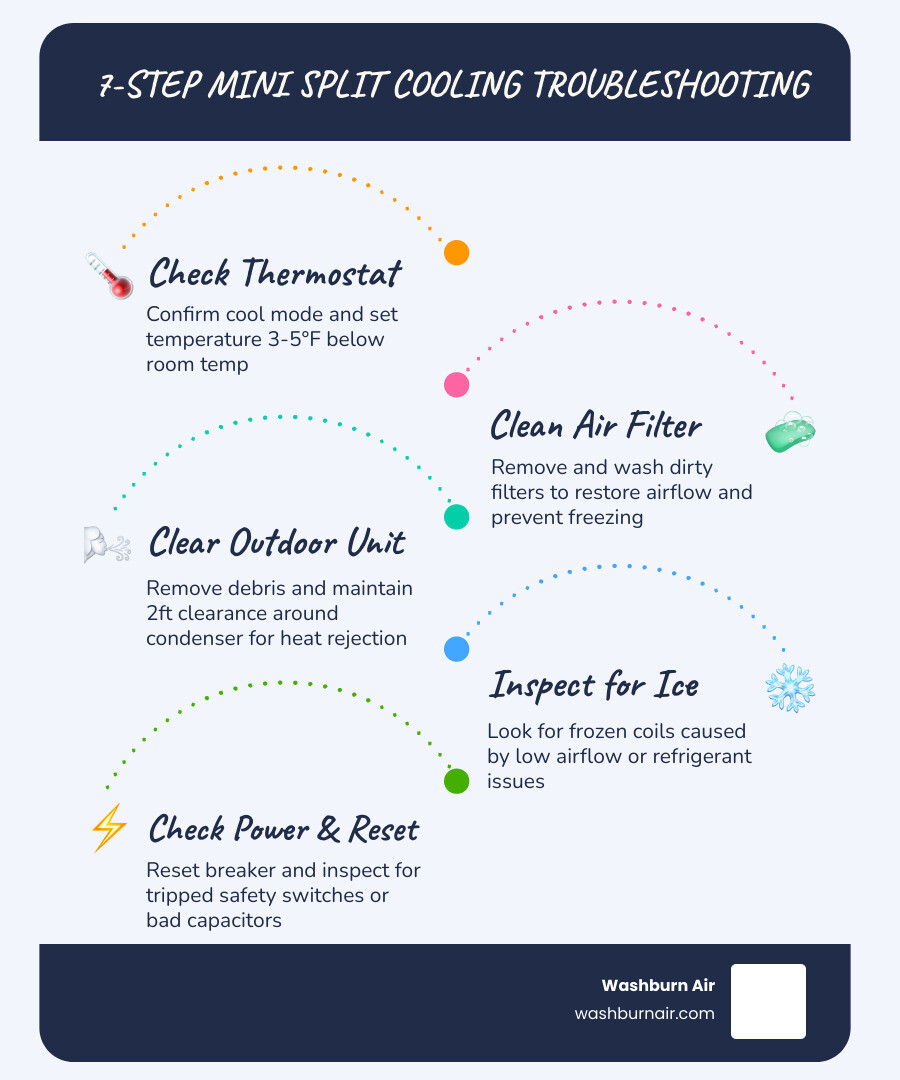
7 Steps to Troubleshoot Your Mini-Split System
Before you panic and assume you need an entirely new system, follow this systematic troubleshooting guide to isolate the issue.
Step 1: Check Thermostat Settings and Remote Modes
It sounds simple, but a surprising number of service calls are resolved by simply adjusting the remote control. Unlike central HVAC systems, mini-splits are controlled individually via hand-held remotes or wall controllers, which can easily be bumped or misconfigured.
- Verify the Mode: Ensure the remote is explicitly set to COOL mode (usually represented by a snowflake icon). If it is set to “Auto,” “Dry,” or “Fan,” the unit will not engage the compressor to produce cold air.
- Check the Temperature Setpoint: Ensure the target temperature is set at least a few degrees below the current room temperature.
- Look for Error Codes: Many modern mini-split indoor units will blink a specific sequence of lights or display an alphanumeric code on the front panel when something is wrong.
Common mini-split error codes often point to specific system issues:
- E1 / E5: Often indicates a communication error between the indoor and outdoor units.
- F1 / F2: Typically points to a faulty indoor temperature sensor or pipe sensor.
- P4: Often signals an inverter compressor overload or outdoor module protection activation.
Step 2: Inspect and Clean Dirty Air Filters
Ductless mini-splits rely on continuous, high-volume airflow to transfer heat out of your room. Because they do not have large central return ducts, their built-in mesh filters are compact and can clog quickly.
A dirty filter restricts airflow across the indoor evaporator coil. When warm air cannot pass over the coil, the refrigerant inside the coil drops below freezing, causing condensation to turn into ice. This block of ice completely stops heat transfer, leading to poor cooling, musty odors, mold growth, and water dripping down your wall. If you notice water pooling beneath your indoor unit, read our guide on Why Your AC is Leaking Water: How to Fix It to prevent water damage to your drywall.
Step 3: Clear Debris Around the Outdoor Condenser
Your outdoor unit needs to breathe. If it cannot exhaust heat, the system’s high-pressure limits will trip, causing the outdoor unit to shut down to prevent compressor damage.
- Maintain Clearance: Ensure there is at least 18 to 24 inches of clear space around all sides of the outdoor condenser. Cut back any overgrown bushes, weeds, or decorative plantings.
- Watch for Cottonwood and Pollen: In North Texas, spring and summer bring heavy pollen and cottonwood seeds. These seeds can form a thick, felt-like blanket over the condenser coils, completely blocking heat transfer.
- Gently Wash the Coils: Turn off the power to the system and use a garden hose (never a pressure washer, which can bend the delicate aluminum fins) to gently rinse away dirt and debris from the outdoor coils.
If your outdoor unit starts and stops repeatedly, it could be overheating due to these blockages. Learn more about this issue by reading Why Your Outdoor AC Unit Keeps Shutting Off.
Step 4: Look for Signs of a Frozen Evaporator Coil
If your mini-split is running but blowing warm air, open the front cover of the indoor unit and inspect the metal coils behind the filters.
If you see ice or frost accumulating on these coils, your system has frozen up.
- Turn off the cooling immediately. Running a frozen system can permanently damage the compressor.
- Switch the mode to “Fan Only” to help circulate warm air and melt the ice.
- Do not scrape the ice. Let it melt naturally to avoid puncturing the delicate aluminum and copper coils.
- Once thawed, check the air filter. If the filter was clean and the coil freezes again, you likely have a refrigerant leak.
Step 5: Check the Condensate Drain Line for Clogs
As your mini-split cools, it removes moisture from the air. This moisture collects in a drain pan inside the indoor unit and flows out through a gravity-fed drain line or a small condensate pump.
During hot humid days, these lines run constantly. Algae, mold, and dust can easily clog the narrow drain tubes. Many modern mini-splits feature a safety float switch. If the drain line backs up, the safety switch will instantly cut power to the outdoor compressor to prevent water from overflowing onto your floors, leaving only the indoor fan running with no cool air.
Step 6: Reset the Circuit Breaker and Check Power
Extreme heat waves put a massive strain on the local electrical grid, which can cause voltage fluctuations. If your outdoor unit suddenly stops running while the indoor unit is still blowing warm air, check your home’s main electrical panel.
Locate the circuit breaker dedicated to your mini-split. Sometimes, a breaker can trip without moving fully to the “OFF” position. Flip it completely off, wait 60 seconds, and flip it back on. Also, check the outdoor disconnect box located near your condenser unit to ensure the pull-out switch or breaker is secure.
Step 7: Identify Mechanical and Electrical Failures
If you have verified that the settings are correct, the filters are clean, and the power is on, but the system still is not cooling, you are likely dealing with a component failure.
- Failed Capacitor: The capacitor acts as a start-up battery for the outdoor fan and compressor. In extreme heat, capacitors are the most common electrical component to fail.
- Failing Compressor: The compressor is the heart of your system. If it is struggling to pump refrigerant, you may hear a loud buzzing or grinding sound coming from the outdoor unit.
- Fan Motor Failure: If the outdoor fan motor fails, heat cannot escape, and the system will shut down on high thermal overload.
To learn how to spot these issues early, check out our guide on Air Conditioner Repair Warning Signs.
When to Call a Professional for Ductless AC Issues
While cleaning a filter or clearing away brush are excellent DIY tasks, some HVAC issues require specialized tools, training, and EPA certifications.
Resolving Why Is My Mini Split Not Cooling During a North Texas Heat Wave with Expert Repair
If your system is low on refrigerant, it is important to know that refrigerant does not get “used up” or evaporate over time. An air conditioner is a sealed loop. If the refrigerant level is low, you have a leak.
Simply topping off the refrigerant without finding and fixing the source of the leak is a temporary, expensive, and environmentally harmful practice. A licensed technician from Washburn Air will use advanced electronic leak detectors or UV dyes to locate the leak, repair the copper lines, pull a deep vacuum to remove moisture, and recharge the system with the exact weight of refrigerant specified by the manufacturer. If your ductless system is blowing warm air during a heat wave, contact us immediately for fast, reliable Mini Split AC Repair.
Preventing Future Failures: Why Is My Mini Split Not Cooling During a North Texas Heat Wave and How Maintenance Helps
The best way to survive a North Texas heat wave is to prevent your cooling system from failing in the first place. Studies show that dirty coils can increase a system’s energy usage by 15% to 20% while significantly shortening the lifespan of the compressor.
A professional maintenance plan includes:
- Deep cleaning of both indoor and outdoor coils.
- Testing electrical connections, capacitors, and contactors.
- Checking operating pressures and refrigerant levels.
- Clearing and flushing condensate drain lines.
Regular maintenance can extend the lifespan of a well-installed mini-split to 18–22 years, compared to just 10–12 years for neglected systems. Explore our comprehensive HVAC Services to schedule your pre-summer tune-up.
Frequently Asked Questions About Mini-Split Failures
| Troubleshooting Step | What to Check | When to Call a Pro |
|---|---|---|
| Thermostat/Remote | Ensure set to COOL mode and temp is set low. | If the indoor display shows persistent error codes. |
| Air Filters | Clean reusable mesh filters every 4-6 weeks. | If coils continue to freeze after cleaning the filters. |
| Outdoor Clearance | Clear 18-24″ of space; rinse light dust with a hose. | If the condenser coils are heavily impacted with dirt/cottonwood. |
| Condensate Drain | Inspect for clogs or water dripping from the indoor unit. | If the drain line requires high-pressure flushing or pump replacement. |
| Electrical Power | Reset the dedicated circuit breaker once. | If the breaker trips repeatedly or you hear loud electrical buzzing. |
Why does my mini-split blow cold air then stop?
This behavior is known as short cycling. It typically happens when a safety mechanism is triggered to protect the system. Common culprits include a clogged condensate line activating the safety float switch, an overheating outdoor fan motor, or a failing compressor. While we primarily associate short cycling with cooling, similar electrical and airflow issues can affect heating systems; if you ever experience winter heating issues, you can read about What to Do If Your Furnace is Blowing Cold Air to understand similar system safety shutdowns.
Can a dirty filter cause my mini-split to freeze?
Yes, absolutely. A dirty filter blocks the warm indoor air from passing over the cold evaporator coils. Without that warm air to heat the refrigerant, the moisture on the coils freezes instantly. This ice acts as an insulator, completely blocking the system’s ability to cool your home.
How long do mini-split systems last in Texas?
With proper installation and annual professional maintenance, a high-quality mini-split system can last between 15 and 20+ years in North Texas. However, because our summers are so extreme, neglected systems often fail much earlier due to compressor burnout. If your system is reaching the end of its life, we can help you explore your options for a brand-new, high-efficiency Mini Split AC Installation.
Conclusion
When a North Texas heat wave strikes, a functioning air conditioner is not just a matter of comfort — it is a matter of safety. If you are struggling to keep your home cool in Grapevine, Southlake, Westlake, Trophy Club, Highland Park, Irving, Dallas, Fort Worth, or Arlington, don’t suffer through the heat.
At Washburn Air, we bring 24/7 local expertise and full-service support to keep your home comfortable all year long. Whether you need a quick diagnostic check, a minor electrical repair, or a complete system tune-up, our team of friendly, professional technicians is ready to help.
Don’t let the Texas heat get the best of your home. Contact Washburn Air today for expert Mini Split AC Repair and enjoy reliable, efficient cooling all summer long!
{“@context”: “https://schema.org”, “@graph”: [{“@type”: “Article”, “headline”: “Mini Split Not Cooling in North Texas | Washburn Air”, “description”: “Wondering why is my mini split not cooling during a North Texas heat wave? Check common causes and quick fixes, then call Washburn Air.”, “author”: {“@type”: “Person”, “name”: “Washburn Air”}, “publisher”: {“@type”: “Organization”, “name”: “Washburn Air”, “logo”: {“@type”: “ImageObject”, “url”: “https://washburnair.com/wp-content/uploads/2024/09/washburn-air-logo-800-400×261.png”}}, “datePublished”: “2026-06-30T02:31:32+00:00”, “dateModified”: “2026-06-30T02:31:44.290298”, “mainEntityOfPage”: {“@type”: “WebPage”, “@id”: “https://washburnair.com/blog/how-to-troubleshoot-mini-split-cooling-in-7-steps/”}, “image”: “https://images.bannerbear.com/direct/4mGpW3zwpg0ZK0AxQw/requests/000/150/373/560/bknAjN4e763m7VVmYXPRKxlD8/ab83facc3dd1e4fd6913bc6b5dc293493a9d485e.jpg”}, {“@type”: “FAQPage”, “mainEntity”: [{“@type”: “Question”, “name”: “Why is my mini split not cooling during a North Texas heat wave?”, “acceptedAnswer”: {“@type”: “Answer”, “text”: “A mini split may stop cooling during a North Texas heat wave because extreme outdoor temperatures push the system to its limits, especially if there is an existing issue such as a clogged filter, dirty condenser coil, refrigerant leak, frozen evaporator coil, or electrical failure.”}}, {“@type”: “Question”, “name”: “What are the most common reasons a mini split is not cooling?”, “acceptedAnswer”: {“@type”: “Answer”, “text”: “Common causes include incorrect thermostat or remote settings, a dirty or clogged air filter, a blocked outdoor condenser, a frozen evaporator coil, low refrigerant from a leak, an overheating outdoor unit, or an electrical problem such as a bad capacitor or tripped breaker.”}}, {“@type”: “Question”, “name”: “Can I troubleshoot a mini split that is not cooling myself?”, “acceptedAnswer”: {“@type”: “Answer”, “text”: “Yes, many common issues can be checked in under 30 minutes, such as confirming the unit is in cool mode, checking for a dirty air filter, and making sure the outdoor condenser is not blocked by debris or poor clearance.”}}, {“@type”: “Question”, “name”: “Why does extreme North Texas heat affect mini split performance?”, “acceptedAnswer”: {“@type”: “Answer”, “text”: “North Texas summers can bring sustained 100°F+ days and attic temperatures above 130°F, forcing mini splits to work near their design limits. Under those conditions, small problems like restricted airflow or dirty coils can quickly lead to poor cooling or system failure.”}}, {“@type”: “Question”, “name”: “When should I call a professional for a mini split not cooling?”, “acceptedAnswer”: {“@type”: “Answer”, “text”: “You should call a professional if the system has a refrigerant leak, electrical failure, failing compressor, or complete cooling loss. These problems require licensed repair and may need urgent service before indoor temperatures become unsafe.”}}]}]}