Why Proper AC Installation Is the Most Important Decision You’ll Make as a North Texas Homeowner
How proper installation affects how long your AC lasts in North Texas is one of the most important things you can understand before buying a new system. The short answer: a properly installed AC in the DFW area can last 15 to 20 years, while a poorly installed one may fail in less than a decade.
Here is what the research shows:
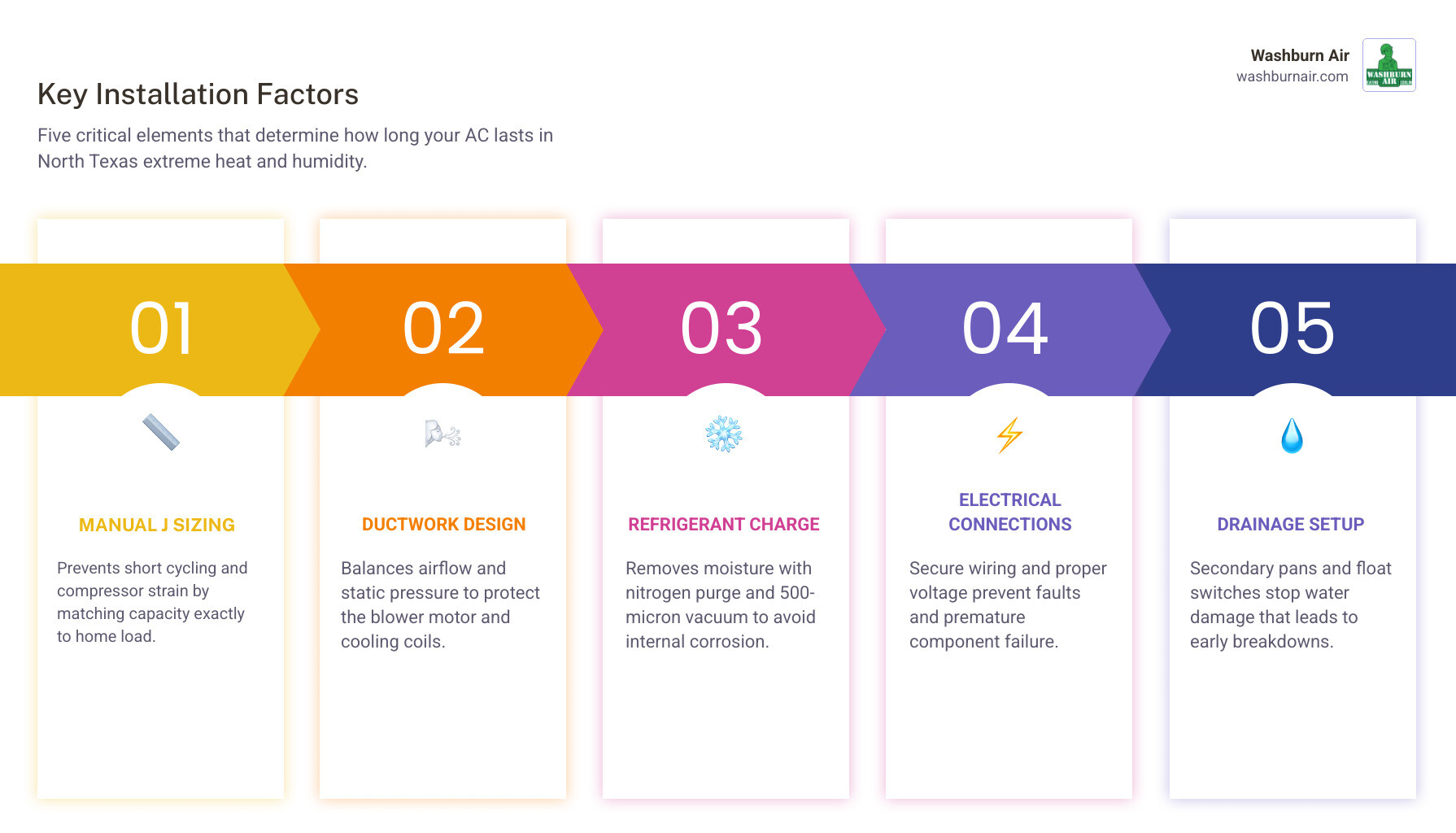
- Proper sizing (via Manual J load calculation) prevents short cycling and overworking, which are two of the fastest ways to kill a compressor
- Correct refrigerant charge stops the system from running harder than it needs to, protecting key components
- Well-designed ductwork keeps airflow balanced so the blower motor and coils are not under constant strain
- Quality electrical connections and drainage setup prevent faults and water damage that lead to early system failure
- Professional commissioning (including nitrogen purging and deep vacuum) removes moisture and contaminants that corrode components from the inside out
The result? Proper installation can add 5 to 8 years to your system’s life, cut the risk of breakdowns in the first five years by roughly 70%, and reduce your energy bills significantly.
North Texas is one of the hardest climates on air conditioning equipment in the entire country. DFW systems log roughly 2,200 to 2,500 runtime hours per year, nearly double the national average. Attic temperatures regularly hit 130 to 150 degrees Fahrenheit in July. Your AC is not just running, it is running hard, every single day, for months on end.
That kind of punishment exposes every shortcut taken during installation. An oversized unit short cycles and never properly removes humidity. An undersized one never stops running. Kinked refrigerant lines cause slow leaks. Undersized return ducts starve the blower motor. These are not theoretical problems. They are the real reasons so many DFW homeowners find themselves replacing a “new” system years earlier than they ever expected.
The good news is that installation quality is entirely within your control, and knowing what to look for makes all the difference.
The Reality of AC Lifespan in the Extreme North Texas Climate
When you look up the average lifespan of a central air conditioning system, national resources often quote a comfortable 15 to 20 years. But here in the Dallas-Fort Worth metroplex—from the leafy streets of Highland Park to the growing neighborhoods of Southlake and Grapevine—our local climate writes its own rules.
In North Texas, a standard AC unit typically reaches the end of its efficient, reliable life at about 10 to 15 years. Why the discrepancy? It all comes down to pure workload and environmental punishment.
Our systems endure a relentless combination of:
- Extreme Thermal Load: We regularly experience over 50 days above 95°F every year, with many of those climbing well into the triple digits.
- Massive Runtime Hours: A DFW air conditioner runs nearly double the annual hours of a system in a milder northern climate. Logging 2,200 to 2,500 hours of operation per year is the norm here.
- High Humidity Swings: Our summers bring dense, heavy humidity that forces the AC to act as both a refrigerator and a dehumidifier.
- Environmental Debris: North Texas wind, pollen, and dust storm through our neighborhoods, settling into outdoor coils and placing extra mechanical strain on the compressor.
Because our systems run for hours on end without shutting off during peak summer months, the internal components experience accelerated wear and tear. This is why investing in expert HVAC Services is so critical. When a system is installed with clinical precision, it is given the defense it needs to handle this brutal workload. Without that solid foundation, the extreme Texas heat will find and exploit every vulnerability, cutting the system’s life short.
How Proper Installation Affects How Long Your AC Lasts in North Texas
Think of buying a new air conditioner like buying a high-performance sports car engine. Even if you purchase the most expensive, top-tier model on the market, it will perform terribly—and likely break down—if it is bolted to a mismatched transmission, starved of oil, and connected with loose wiring.
Air conditioning is not a plug-and-play appliance. It is a complex, site-assembled system where the indoor air handler, outdoor condenser, refrigerant lines, ductwork, and electrical controls must all work in perfect harmony. This is why how proper installation affects how long your AC lasts in North Texas cannot be overstated.
When we perform a professional AC Replacement, we are not just swapping boxes. We are engineering a micro-climate control system tailored specifically to your home’s unique footprint.
If an installation is rushed or done poorly, several critical issues occur:
- Component Overheating: Restricted airflow forces the blower motor to work harder, pulling more electrical current and overheating.
- Compressor Strain: The compressor is the heart of the system. Incorrect refrigerant levels or restricted lines force the compressor to operate at elevated pressures, causing early mechanical failure.
- Short Cycling: A system that turns on and off constantly experiences rapid wear on its start capacitors, contactors, and fan motors.
By ensuring every physical connection, airflow calculation, and electrical link is executed to the highest industry standards, we prevent the premature wear that causes poorly installed systems to fail in less than a decade.
Critical Installation Factors That Determine Long-Term Reliability
To truly understand how a quality installation protects your system, we have to look under the hood. Several key physical factors must be addressed on installation day to ensure your AC survives twenty North Texas summers.
First, the physical foundation matters. Placing an outdoor condenser on uneven ground, precast plastic pads, or loose cinder blocks is a recipe for disaster. Over time, the soil in areas like Fort Worth and Arlington shifts. A tilted condenser prevents oil from distributing evenly within the compressor, leading to friction and burnout. We use reinforced concrete pads or highly stable, level platforms to ensure proper oil circulation.
Second, the electrical setup must be flawless. High-load summer days put incredible stress on the local power grid, leading to voltage fluctuations. During installation, we ensure wire sizing is calculated correctly to prevent voltage drops. We also highly recommend installing dedicated surge protection directly at the outdoor disconnect to safeguard the system’s sensitive electronic control boards from lightning and grid spikes.
Finally, proper condensate drainage is a silent shield against property damage and system shutdowns. A cooling system pulls gallons of water out of the humid North Texas air every day. If the drainage system is pitched incorrectly or lacks a proper P-trap, water can back up. In attic installations, this can ruin ceilings.
To prevent this, we install secondary drain pans equipped with automatic float switches. If the primary drain ever clogs, the float switch instantly shuts down the system, protecting your home from water damage and alerting you to the issue. This level of detail is standard across all our services, including Mini Split AC Installation.
Sizing and Sizing Calculations: How Proper Installation Affects How Long Your AC Lasts in North Texas
One of the most common mistakes in the HVAC industry is “rule-of-thumb” sizing. Many contractors will look at the square footage of a home in Irving or Grapevine and simply guess the tonnage needed, or worse, just replace the existing unit with the exact same size.
But homes change over time. You might have upgraded to energy-efficient windows, added attic insulation, or planted shade trees. This is why we always perform a comprehensive ACCA Manual J load calculation before any installation.
- The Danger of Oversizing: Many homeowners assume that “bigger is better” when it comes to cooling. However, an oversized AC unit will cool your home too quickly and shut off. This is called short cycling. Because the system runs in short bursts, it never stays on long enough to pull humidity out of the air, leaving your home feeling clammy and cold. Furthermore, the constant starting and stopping places immense wear on the compressor, drastically shortening its life.
- The Danger of Undersizing: Conversely, an undersized unit will struggle to meet the thermostat’s demands during a 105°F August afternoon in Westlake. It will run continuously for hours, overworking the compressor and fan motors, leading to high utility bills and early system burnout.
Proper sizing is the very foundation of how proper installation affects how long your AC lasts in North Texas. We ensure your system is sized perfectly to match your home’s actual heat gain, balancing comfort, humidity control, and equipment longevity.
Ductwork Design and Airflow Optimization
Your ductwork is the vascular system of your home’s comfort. You can install the most efficient air conditioner in the world, but if your ducts are constricted, leaky, or poorly designed, the system will suffocate.
We often see homes in Trophy Club or Highland Park where a new, high-performance AC was attached to old, collapsing ductwork. This creates high static pressure—the HVAC equivalent of high blood pressure. When static pressure is too high, the blower motor has to work twice as hard to push air through the vents, leading to premature motor failure.
During a professional Air Duct Installation, we evaluate and design the system to ensure:
- Adequate Return Air: The system must be able to “breathe” in enough warm air to cool it down. Undersized return grilles are a leading cause of frozen evaporator coils.
- Properly Sealed Joints: We use mastic duct sealant and UL-listed metal tape to prevent conditioned air from escaping into your hot attic. Eliminating just 10% of duct leakage can return massive cooling capacity back to your living spaces.
- Kink-Free Flex Ducts: Flex ducts must be pulled tight and supported properly. A single kink or sharp bend can restrict airflow by up to 50%.
Refrigerant Charge and Clinical Commissioning
The refrigerant inside your air conditioner is what actually transfers heat out of your home. Getting the refrigerant charge exactly right is a highly precise process that requires specialized tools and patience.
During brazing (welding the copper refrigerant lines together), we always flow dry nitrogen through the pipes. This prevents oxygen from entering, which would otherwise create black copper oxide scale inside the lines. Without a nitrogen purge, this scale flakes off and clogs the delicate Thermal Expansion Valve (TXV), destroying the compressor within a few years.
After brazing, we use a high-vacuum pump to pull the system down to 500 microns or lower. This deep vacuum does two critical things:
- It proves there are absolutely no micro-leaks in the copper lines.
- It vaporizes and removes any trace of atmospheric moisture.
If moisture is left inside the lines, it reacts with the synthetic POE refrigerant oil to create hydrofluoric acid. This acid slowly eats away at the copper motor windings inside your compressor, causing an expensive, premature electrical failure.
Once the vacuum holds, we weigh in the refrigerant charge precisely, adjusting for the exact length of the line set, and verify performance by measuring superheat and subcooling. This clinical commissioning process ensures your system operates at peak efficiency from day one.
Red Flags: Signs of a Poorly Installed Air Conditioner
If you recently had a new system put in, or if you are moving into a home with an older unit, it is important to recognize the warning signs of a low-quality installation. Catching these red flags early can save you from a catastrophic system failure in the middle of a hot summer.
Keep an eye out for these common warning signs:
- Weak Airflow: If some rooms feel like a gentle breeze while others get no air at all, your ductwork is likely unbalanced or leaking.
- Frequent Cycling: If your AC turns on, runs for three minutes, shuts off, and then turns back on five minutes later, it is likely oversized.
- Uneven Cooling: Hot and cold spots throughout your home usually point to incorrect system sizing or poor duct design.
- Water Pooling: Finding water around your indoor air handler or dripping from your secondary drain line outside indicates a clogged or improperly sloped drain pan.
- Unusual Noises: Squealing, rattling, or hissing sounds immediately after installation point to loose components, duct restrictions, or refrigerant leaks.
- Skyrocketing Utility Bills: If your energy costs are climbing despite having a new, high-efficiency system, the unit is likely working under high static pressure or has an incorrect refrigerant charge.
If you are experiencing any of these issues, it is time to evaluate whether you need a professional diagnostic check. For a deeper look into making this decision, read our guide on Should I Repair or Replace My AC in North Texas?.
Troubleshooting Early Failures: How Proper Installation Affects How Long Your AC Lasts in North Texas
When a relatively new air conditioner fails within its first five years, homeowners are often quick to blame the manufacturer. However, true manufacturing defects are incredibly rare. In the vast majority of cases, early system failures can be traced directly back to installation shortcuts.
For example, a premature compressor failure is almost always caused by system contamination (no nitrogen purge during brazing), liquid refrigerant slugging back into the compressor (incorrect charge), or extreme operating temperatures (restricted airflow).
Similarly, rapid capacitor wear and electrical faults are often the result of loose wiring terminals or incorrect fuse sizing during the initial setup. When we troubleshoot these early failures, our goal is not just to replace the broken part, but to identify and correct the underlying installation error that caused the part to fail in the first place.
Protecting Your Investment: Warranties and Post-Installation Care
A new air conditioning system is a major home investment. To protect that investment, you need to understand how professional installation and ongoing care interact with your equipment’s warranty.
Most major HVAC manufacturers offer robust 10-year parts warranties upon registration. However, what many homeowners do not realize is that manufacturers require professional installation and annual maintenance to keep those warranties valid. If a system fails because of a documented installation error or complete neglect, the manufacturer can—and often will—deny your warranty claim.
| Installation / Care Factor | Professional Installation & Maintenance | DIY / Low-Bidder Installation |
|---|---|---|
| Manufacturer Warranty | Fully validated and protected | Often voided due to improper setup |
| System Lifespan | 15 to 20 years of reliable service | Often fails in less than 10 years |
| Energy Efficiency | Operates at rated SEER2 efficiency | Up to 30% drop in efficiency |
| First-Year Breakdown Risk | Extremely low (roughly 70% reduction) | High risk of nuisance shutdowns |
| Safety Compliance | Meets all local DFW building codes | Risk of electrical fire or carbon monoxide |
Once your system is properly installed, the best way to maximize its lifespan is through consistent, proactive care. This is where regular AC Maintenance comes in.
By enrolling in comprehensive HVAC Maintenance Plans, you ensure that small issues—like a slightly dirty coil or a weakening capacitor—are caught and corrected before they turn into major system failures.
Additionally, if you are currently evaluating the long-term financial picture of your home comfort, reviewing the Cost to Replace Air Conditioner can help you plan ahead and see why investing in a quality install pays off over time.
Frequently Asked Questions About North Texas AC Lifespan
How long does an AC unit typically last in Dallas-Fort Worth?
In the Dallas-Fort Worth area, a central air conditioner or heat pump typically lasts between 10 and 15 years. While systems in milder climates can easily reach 20 years, the extreme summer heat, high humidity, and long operating hours in North Texas place a much heavier mechanical workload on the equipment, accelerating natural wear and tear. However, a system that receives a flawless professional installation and consistent annual maintenance can push past the average and last 15 to 20 years.
Can a bad installation void my AC manufacturer warranty?
Yes, a poor or unlicensed installation can absolutely void your manufacturer’s warranty. Major brands require that their equipment be installed by a licensed, professional HVAC contractor according to strict manufacturer guidelines and local building codes. If a major component like the compressor fails, and the manufacturer determines the failure was caused by installation errors—such as incorrect refrigerant charge, improper duct design, or failure to pull a deep vacuum—they may deny the parts claim.
What is a Manual J load calculation and why is it necessary?
A Manual J load calculation is the industry-standard method developed by the Air Conditioning Contractors Association (ACCA) to determine the exact amount of heating and cooling a home needs. It is necessary because it takes into account unique factors beyond simple square footage, including your home’s insulation levels, roof material, window types, house orientation to the sun, and local climate data. This ensures your new AC is sized perfectly—preventing the efficiency loss of an undersized system and the rapid wear and tear of an oversized, short-cycling unit.
Conclusion
At Washburn Air, we believe that the most important day in your air conditioner’s life is the day it is installed. As a local HVAC contractor based in Grapevine, TX, we bring 24/7 local expertise and full-service support to homeowners across the entire Dallas-Fort Worth area, including Fort Worth, Arlington, Irving, Southlake, Westlake, Trophy Club, and Highland Park.
We don’t believe in shortcuts, “rule-of-thumb” guesses, or rushed jobs. Our team approaches every installation as a precise engineering project, ensuring your new system is sized perfectly, cleared of all internal contaminants, and commissioned to deliver maximum efficiency and longevity.
If you want to ensure your home stays cool, comfortable, and energy-efficient for the next two decades, don’t leave your installation to chance. Schedule professional HVAC services with Washburn Air today, and experience the peace of mind that comes with true local expertise.
{“@context”: “https://schema.org”, “@graph”: [{“@type”: “Article”, “headline”: “Proper AC Installation in North Texas | Washburn Air”, “description”: “Learn how proper installation affects how long your AC lasts in North Texas. Protect your system, cut breakdowns, and call Washburn Air today.”, “author”: {“@type”: “Person”, “name”: “Washburn Air”}, “publisher”: {“@type”: “Organization”, “name”: “Washburn Air”, “logo”: {“@type”: “ImageObject”, “url”: “https://washburnair.com/wp-content/uploads/2024/09/washburn-air-logo-800-400×261.png”}}, “datePublished”: “2026-06-29T02:31:24+00:00”, “dateModified”: “2026-06-29T02:31:34.710480”, “mainEntityOfPage”: {“@type”: “WebPage”, “@id”: “https://washburnair.com/blog/the-complete-guide-to-how-proper-installation-affects-how-long-your-ac-lasts-in-north-texas/”}, “image”: “https://images.bannerbear.com/direct/4mGpW3zwpg0ZK0AxQw/requests/000/150/373/532/jMDOvP3KezRL0bbbQlqoyk8AW/191f31e10ae7299828796ea8c28d28ba4ebba620.jpg”}, {“@type”: “FAQPage”, “mainEntity”: [{“@type”: “Question”, “name”: “How long does a properly installed AC last in North Texas?”, “acceptedAnswer”: {“@type”: “Answer”, “text”: “A properly installed AC system in the DFW area can last 15 to 20 years. A poorly installed system may fail in less than a decade.”}}, {“@type”: “Question”, “name”: “Why does AC installation quality matter so much in North Texas?”, “acceptedAnswer”: {“@type”: “Answer”, “text”: “North Texas is extremely hard on air conditioning systems, with DFW units running roughly 2,200 to 2,500 hours per year and attic temperatures reaching 130 to 150 degrees in July. This heavy use exposes installation shortcuts and can lead to early system failure.”}}, {“@type”: “Question”, “name”: “What AC installation mistakes shorten system lifespan?”, “acceptedAnswer”: {“@type”: “Answer”, “text”: “Common problems include improper sizing, incorrect refrigerant charge, poorly designed ductwork, bad electrical connections, poor drainage setup, kinked refrigerant lines, and skipped commissioning steps. These issues can cause short cycling, leaks, overworked components, water damage, and internal corrosion.”}}, {“@type”: “Question”, “name”: “How does proper AC sizing affect system performance?”, “acceptedAnswer”: {“@type”: “Answer”, “text”: “Proper sizing through a Manual J load calculation helps prevent short cycling and overworking, which are two major causes of compressor failure. An oversized unit may short cycle and fail to remove humidity, while an undersized unit may run constantly.”}}, {“@type”: “Question”, “name”: “How much can proper AC installation extend system life?”, “acceptedAnswer”: {“@type”: “Answer”, “text”: “Proper installation can add 5 to 8 years to an AC system’s life, reduce the risk of breakdowns in the first five years by roughly 70%, and significantly lower energy bills.”}}]}]}