Why Is Water Dripping From Your Bedroom Mini-Split?
Is your bedroom mini-split suddenly dripping water down the wall, leaving you scrambling for towels in the middle of the night? Knowing exactly what to do when your mini split leaks water inside your bedroom can mean the difference between a quick cleanup and costly drywall repairs. It is incredibly alarming to wake up and find a puddle forming on your bedroom floor, especially when your ductless unit is supposed to be keeping you comfortable. However, while an indoor leak looks like a catastrophic failure, our team at Washburn Air frequently reassures panicked homeowners that it is usually a symptom of a drainage backup rather than a completely broken air conditioner.
Ductless units do more than just cool the air; they extract massive amounts of moisture from your indoor environment. When that moisture has nowhere to go, it eventually overflows. As local HVAC professionals, we know exactly how heavy the Grapevine humidity gets, which forces your system to work overtime pulling water from the air. When you are facing an indoor leak, taking immediate action to protect your home is critical before you schedule professional cooling services.
Understanding the Urgency of Bedroom Water Leaks
A leak in the bedroom presents unique challenges compared to a leak in a garage or utility room. Bedrooms are typically filled with vulnerable materials. Water running down the wall can quickly seep behind baseboards, saturate drywall, and soak into carpet padding or hardwood flooring. If left unaddressed, even a slow drip can lead to warped floorboards, ruined paint, and the rapid development of mildew inside your wall cavity.
The immediate goal is triage: you need to stop the source of the water and protect your property. Because ductless units are mounted high on the wall, water follows gravity, often tracking along electrical cords or splashing outward as it falls. Recognizing that this is a common, fixable drainage issue can help alleviate the initial panic, allowing you to focus on securing your bedroom furniture and shutting the system down safely.
Immediate Steps to Stop the Leak and Protect Your Bedroom
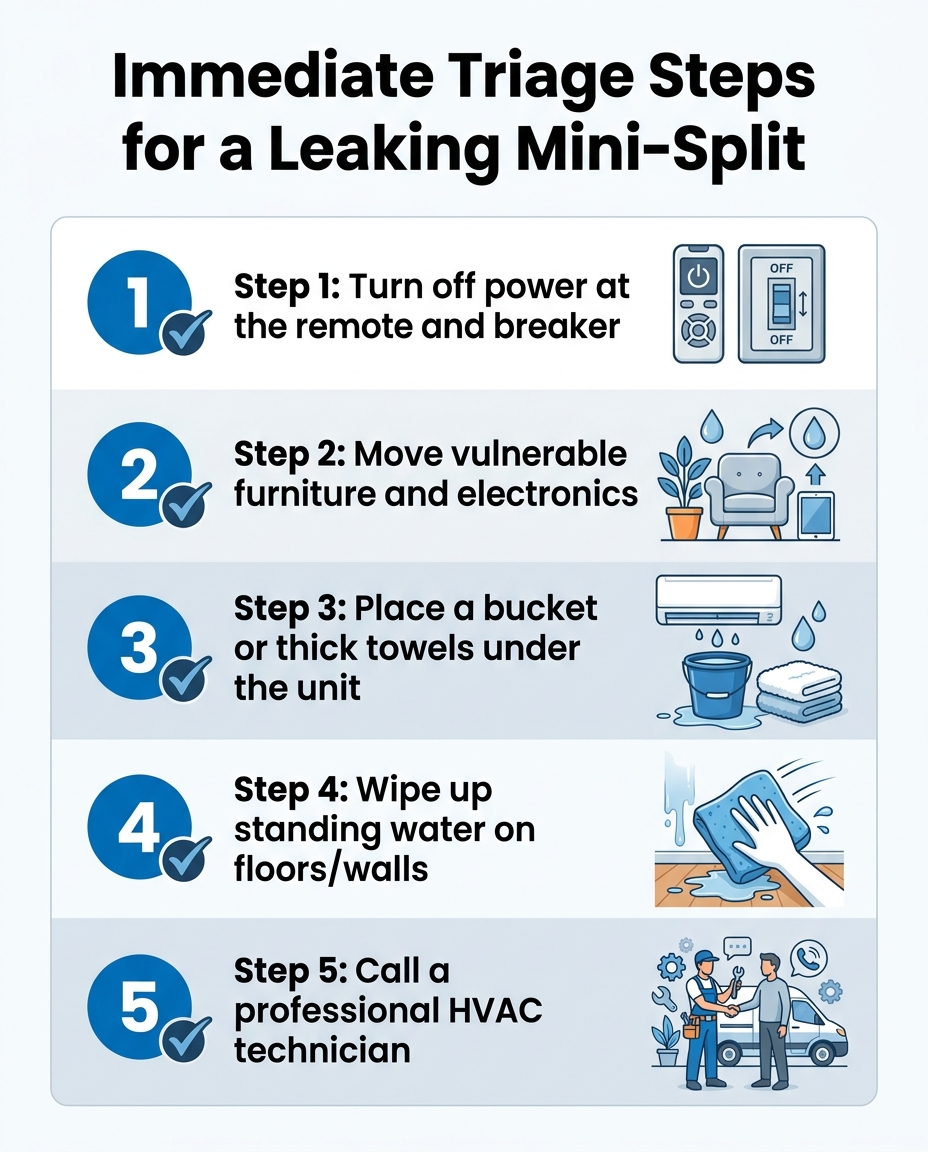
When you discover water pouring from your indoor unit, you must act quickly to mitigate secondary water damage. Especially during the intense heat of July peak summer, our technicians note that your unit is likely producing a significant amount of condensation every hour. Follow these immediate triage steps to secure your bedroom.
- Turn off the power immediately: Grab your remote control and power down the mini-split head unit. Next, go to your home’s main electrical panel and flip the breaker dedicated to the air conditioning system. Because water and electricity are a dangerous combination, cutting the power at the breaker ensures that no live voltage is running through the wet components of the indoor unit.
- Move vulnerable furniture and electronics: Clear the “drip zone” beneath the unit. Push your bed, nightstands, and dressers away from the wall. If you have televisions, lamps, or chargers plugged in directly below the mini-split, unplug them and move them to a dry area. Mattresses and upholstery act like sponges, so getting them out of the way is your top priority.
- Catch the falling water: Place a large plastic bucket directly beneath the leak. If the water is tracking down the wall rather than dripping straight down, lean a thick, rolled-up towel against the baseboard to absorb the moisture before it can travel across the floor. You may need to swap these towels out frequently if the unit’s internal drain pan is completely full and slowly draining out.
- Wipe up standing water: Once the immediate dripping is contained, dry the surrounding area. If you have hardwood or laminate flooring, dry it thoroughly to prevent the seams from swelling and buckling. For carpeted floors, use a wet/dry shop vacuum to extract as much moisture from the fibers and padding as possible. Point a floor fan at the wet spot to accelerate drying and prevent musty odors.
How High Humidity Causes Condensate Drain Line Clogs
To understand why your bedroom unit is suddenly leaking, it helps to understand the mechanics of dehumidification. Air conditioners do not just lower the temperature; they condition the air by removing excess moisture. In highly humid conditions, a standard air conditioning system can extract between 10 to 20 gallons of water from your indoor air every single day. This water, known as condensate, drips off the cold evaporator coils into a hidden drain pan inside the wall unit, where it is supposed to flow outside through a PVC or flexible condensate drain line.
Grapevine’s extremely hot, humid summers cause mini splits to extract massive amounts of moisture, creating the perfect environment for rapid clogs. In our years of servicing ductless systems throughout the area, we’ve found that when your system runs continuously to fight off the heavy Texas heat, the condensate drain line never has a chance to dry out. This constant flow of water creates a dark, damp, and cool environment inside the pipe.
The Biology of a Drain Line Backup
Because the inside of the drain line remains perpetually wet, it becomes an ideal breeding ground for biological growth. Airborne dust and organic particles bypass the filter and mix with the water in the drain pan. Over weeks of heavy operation, algae, mold, and mildew begin to bloom inside the narrow drain tubing. This biological sludge forms a thick, jelly-like substance that eventually chokes off the flow of water.
Once the algae forms a complete blockage, the condensation has nowhere to go. It backs up into the indoor drain pan. Because the drain pan is relatively shallow, it quickly reaches capacity. The water then crests the lip of the pan, breaches the plastic casing of your mini-split, and overflows directly down your bedroom wall.
| System Status | Moisture Flow | Drain Pan Condition | Result in Bedroom |
|---|---|---|---|
| Normal Operation | Flows freely outside | Drains continuously | Dry walls and floors |
| High Humidity Load | Heavy, constant flow | Near capacity but draining | Increased risk of algae bloom |
| Clogged Drain Line | Trapped inside the pipe | Overflows the lip | Water leaking down the wall |
Other Reasons Your Ductless AC Might Spit Water
While a clogged condensate line is the most common culprit behind an indoor leak, especially during July peak summer, it is not the only potential cause. If your unit is spitting water into the room or leaking from unusual spots, one of these other mechanical issues may be to blame.
- Dirty and restricted air filters: When your air filters are clogged with heavy dust and pet dander, warm air cannot flow over the evaporator coil. Without that warm airflow, the refrigerant inside the coil drops below freezing, causing the ambient condensation to turn into a solid block of ice. When the system eventually turns off, that ice melts rapidly, overwhelming the drain pan and causing water to pour out of the front louvers.
- Cracked or damaged drain pans: Over time, the constant temperature fluctuations between hot summers and cooler off-seasons can cause the plastic drain pan inside the unit to become brittle. If a hairline crack develops, the water will slowly seep through the bottom of the unit before it ever reaches the drain hole.
- Improper installation or unlevel mounting: Mini-splits rely entirely on gravity to drain water away from the indoor unit. If the mounting bracket on your bedroom wall is not perfectly level, or if it tilts slightly forward, the water will pool on the wrong side of the drain pan. Instead of flowing out the back toward the exit pipe, it will spill over the front edge.
- Disconnected drain hoses: Sometimes, the flexible drain hose that connects the indoor pan to the outdoor pipe can vibrate loose or become disconnected behind the wall. When this happens, the water bypasses the pipe entirely and leaks directly into the wall cavity.
Warning Signs Before the Leak Happens
Leaks rarely happen without warning. In the days leading up to a major overflow, you might notice a musty, dirty-sock smell coming from the unit when you turn it on. This is the scent of the algae blooming in the pan. You might also hear a faint gurgling or bubbling sound, which indicates that water is struggling to push past a partial blockage in the drain line. Paying attention to these early symptoms can help you catch a clog before it ruins your drywall.
Why Clearing a Clogged Condensate Line Requires an Expert
When faced with a clogged drain line, it is tempting to look for quick DIY fixes online. However, modern ductless mini-splits are complex, tightly engineered pieces of equipment. Attempting to clear a severe blockage yourself can easily result in permanent damage to the unit or hidden secondary water damage inside your walls.
The Problem: The blockage is usually located deep inside the narrow, flexible tubing that runs through your wall cavity to the outdoors. The indoor drain pan itself is buried beneath the outer plastic casing, electrical control boards, and delicate sensor wires.
The Cause: Grapevine’s heavy humidity creates dense, stubborn biological clogs that cannot be simply washed away. Furthermore, pouring harsh chemicals like bleach down the drain line—a common DIY myth—is highly destructive. Bleach degrades the plastic tubing over time, causing it to become brittle and shatter inside your walls. It also emits corrosive fumes that can damage the sensitive copper coils and electrical components nearby.
The Solution: Safely resolving the leak requires a professional touch. At Washburn Air, we’ve spent years mitigating water damage and safely restoring comfort for Grapevine homeowners, stepping in exactly where DIY limits end. Our professional technicians use specialized tools, such as heavy-duty HVAC vacuums and regulated compressed air, to safely pull or push the clog out of the line from the outside of the house. We know exactly how to carefully dismantle the indoor casing without disrupting the electrical connections. Most importantly, a professional can thoroughly inspect the system to verify that the water hasn’t caused hidden electrical damage or structural rot behind your bedroom drywall.
Frequently Asked Questions About Leaking Mini Splits
If you struggle with upstairs cooling in July, you might notice your bedroom unit running constantly, which naturally raises questions about maintenance and potential water issues. Here are detailed answers to the most common questions homeowners have when facing a leaking ductless unit.
Can I still use my AC if it’s leaking water?
No, continuing to run a leaking unit will only produce more condensation and worsen the problem. The air conditioner will keep extracting moisture from the air, which will continue to overflow the clogged drain pan. Running it risks severe water damage to your bedroom drywall, flooring, and the unit’s internal electrical components. Turn the system off immediately at the remote and the breaker, and wait for a professional assessment.
Why is my mini split leaking water from the front?
Water dripping directly from the front louvers often indicates a frozen evaporator coil that is rapidly melting. This is typically caused by a severely clogged air filter restricting the necessary airflow over the cold coils. It can also occur if the indoor unit was improperly leveled during installation, causing the extracted water to pool at the front of the shallow drain pan instead of flowing toward the back drain port.
What causes a mini split drain line to clog?
Drain lines clog primarily due to a buildup of biological growth, such as algae, mold, and mildew. Because the inside of the drain pipe is dark, cool, and constantly damp during the cooling season, airborne dust and organic matter mix with the water to create a thick sludge. Over time, this sludge builds up along the walls of the narrow pipe until it completely blocks the flow of water, forcing it to back up into the indoor unit.
Why is my ductless AC spitting water?
Spitting water is usually caused by a dirty blower wheel or a frozen coil rather than a simple drain clog. If ice builds up on the coils, it can block the normal, smooth flow of air and water down into the pan. As the internal fan spins, it catches these rogue water droplets or small chunks of melting ice and physically throws them out into the room. A heavily soiled blower wheel can also disrupt the airflow enough to pull water off the coil.
How much water does an AC extract in humid climates?
In highly humid environments, a standard central or ductless system can extract 10 to 20 gallons of water per day from your indoor air. This massive volume of water underscores exactly why a clear, functioning drain line is absolutely critical to your system’s operation. If that line becomes blocked even for a few hours during peak heat, gallons of water can quickly overflow into your living space.
Is it safe to clean my own mini split drain line?
While you can and should regularly clean the reusable air filters under the front hood, accessing and clearing the drain line yourself is not recommended. Improper techniques, such as shoving wires into the port or using the wrong chemicals, can easily crack the fragile drain pan. You also risk dislodging the drain hose deep inside the wall cavity or exposing yourself to dangerous electrical hazards near the control board.
Get Prompt Help for Your Leaking Bedroom AC
A leaking mini-split is an urgent issue that should never be ignored or put off until the weekend. Water pooling in your bedroom can quickly ruin expensive flooring, destroy drywall, and create hidden mold problems inside your walls. While it is stressful to deal with a leak during the peak heat of a Grapevine summer, the solution is usually a straightforward professional drain clearing.
Relying on professional help ensures that the stubborn clog is cleared safely, completely, and without risking further damage to your delicate HVAC components. If you have secured the area and turned off the power, the next step is to get an expert on the job. Do not let a drainage backup compromise your home’s comfort and safety; contact our team today to restore your bedroom’s cooling system safely and efficiently.