Why Your AC Won’t Stop Running (And Why You Shouldn’t Panic Yet)
Your AC is running nonstop, but the house still feels warm. If you find yourself searching, “Is Your AC Running Constantly but the House is Still 80 Degrees?”, you are experiencing one of the most frustrating and panic-inducing scenarios a homeowner can face. Listening to your cooling system roar continuously while the thermostat refuses to budge from that uncomfortable 80-degree mark is enough to make anyone worry about an imminent system failure. During a July peak summer heatwave here in Grapevine, our Washburn Air technicians frequently help frantic homeowners take a calm, systematic approach to figure out what is actually happening behind their vents.
The central diagnostic question you must answer is this: Is your air conditioning system simply maxed out by extreme outdoor weather, or is it suffering from a critical mechanical failure? Not every constantly running air conditioner is broken. Sometimes, the equipment is doing exactly what it was designed to do, but the environmental heat load has simply overpowered it.
The quick fix: If your AC is running constantly but the house stays at 80 degrees, it is either operating at its maximum capacity due to extreme outdoor heat or suffering from a mechanical failure like a refrigerant leak. If you notice ice on the refrigerant lines or warm air coming from the vents, shut the system off immediately to prevent compressor damage and call a professional. If the air coming from the vents is still cold, the system may simply be struggling to keep up with record-breaking temperatures.
Understanding the 20-Degree Rule and HVAC Design Limits
To understand why your home might be stuck at an 80 degrees indoor temperature despite the air conditioner running at full blast, you need to understand how residential cooling systems are engineered. Air conditioners do not magically create cold air; they remove heat from the air inside your home and transfer it outside. This heat transfer process has strict physical limitations.
The Science of Delta T
In the HVAC industry, the temperature difference between the warm air entering your return vents and the conditioned air blowing out of your supply vents is known as “Delta T” (temperature differential). Standard residential air conditioning systems are designed to achieve a 15 to 20-degree temperature drop. If your system is pulling in 80-degree air from your hallway, the air blowing out of the bedroom vents should be roughly 60 to 65 degrees. If your system is achieving this 20-degree drop, the mechanical components are functioning perfectly, even if the house feels too warm.
HVAC Design Temperatures in North Texas
Air conditioners are sized and installed based on regional “design temperatures.” In our years of designing and installing systems across North Texas, we ensure equipment matches the standard HVAC design temperature, which generally sits around 98 to 100 degrees Fahrenheit. This means the system is explicitly engineered to maintain a comfortable 72 to 75-degree indoor environment when the outside temperature is 100 degrees.
However, when North Texas 100+ degree heatwaves push the outdoor thermometer to 105 or 110 degrees, the heat bleeding into your home through the roof, windows, and walls happens faster than the AC can remove it. The math is straightforward: if it is 108 degrees outside, an air conditioner holding the indoor air at a steady 80 degrees is actually performing exactly as designed. It is operating at its absolute maximum capacity, fighting a losing battle against the extreme thermal load of the sun.
Extreme Heat vs. An Undersized AC Unit
While extreme weather can temporarily overwhelm a perfectly healthy cooling system, prolonged periods of high temperatures often expose a different underlying issue: an undersized air conditioning unit. When an AC unit lacks the required tonnage (cooling capacity) for the square footage and heat load of a property, it will struggle to satisfy the thermostat even on moderately hot days.
Why Undersized Units Run Continuously
An undersized unit will run continuously because it can never quite satisfy the thermostat’s demand during peak heat. The system is mechanically sound, but it lacks the brute force necessary to overcome the thermal energy entering the home. This results in high energy consumption, accelerated wear and tear on moving parts, and a persistently uncomfortable living space.
The Impact of Home Architecture
Our team sees this capacity struggle regularly in Grapevine TX, where older properties or homes lacking mature shade trees absorb massive amounts of solar radiation. Homes built with vaulted ceilings, large south-facing windows, or inadequate attic insulation place an enormous burden on the cooling equipment. In fact, this structural heat load is exactly why homes struggle with upstairs cooling in July. The second floor absorbs the brunt of the attic heat, forcing the undersized unit to run non-stop in a futile attempt to cool the upper levels.
The critical distinction: While an undersized unit is inefficient and frustrating, it is a fundamentally different problem than an active mechanical failure. An undersized unit is a capacity issue; a mechanical failure is a breakdown that requires immediate repair to prevent further damage to the equipment.
Identifying a Dangerous Refrigerant Leak
If your system is not simply undersized or fighting record-breaking heat, a constant run cycle often points to a serious mechanical failure. The most common and dangerous culprit is a refrigerant leak. Refrigerant is the lifeblood of your air conditioning system. It is the chemical compound responsible for absorbing heat from your indoor air and releasing it outside.
Over the years, we have found that when your system loses refrigerant due to a microscopic hole in the copper lines or evaporator coil, it loses its ability to transfer heat. The system will continue to run continuously because the thermostat registers that the house is still hot, but the air conditioner is essentially circulating air without removing the thermal energy.
Physical Signs of a Refrigerant Leak
When we dispatch our crews on a blistering July peak summer afternoon, we always tell homeowners to be vigilant for the physical symptoms of low refrigerant. Look for these specific warning signs:
- Ice buildup on the evaporator coils: Check the indoor unit (usually in the attic or a closet). If you see a block of ice forming on the coils, the system is freezing up due to low pressure.
- Frost on the outdoor refrigerant lines: Inspect the copper pipes running from your house to the outdoor condenser. Frost or thick ice on the larger, insulated line is a major red flag.
- Distinctly warm air blowing from vents: Hold your hand up to a supply register. If the air feels lukewarm or room temperature rather than crisp and cold, the heat transfer process has failed.
- Hissing or bubbling sounds: In rare cases of a severe leak, you might hear a faint hissing sound near the indoor unit or the outdoor condenser where the pressurized gas is escaping.
Important safety note: Finding and fixing a refrigerant leak requires specialized tools, pressurized nitrogen, and an EPA-certified professional. Because refrigerant operates under extreme pressure and involves complex chemical handling, this is strictly not a DIY repair. Adding “freon” without fixing the underlying leak is illegal and ineffective.
The Imminent Threat of Compressor Burnout
Escalating urgency is necessary when discussing refrigerant leaks because ignoring the symptoms leads to one of the most catastrophic failures a homeowner can experience: compressor burnout. In our field experience, many homeowners mistakenly assume that leaving a struggling system running is harmless—that it might just take a little longer to cool the house. This assumption is incredibly dangerous.
How Refrigerant Protects the Compressor
The compressor, located inside the outdoor condenser unit, is the heart of your HVAC system. It is a powerful motor that pumps the refrigerant through the copper lines. What most homeowners do not realize is that the refrigerant does not just cool the house; it also cools the air conditioning compressor itself. The cold gas returning from the indoor evaporator coil flows directly over the compressor motor windings, preventing them from overheating during operation.
The Anatomy of a Catastrophic Failure
If your system has a refrigerant leak, it is starved of this vital cooling gas. When you allow a leaking system to run continuously while trying to maintain an 80 degrees indoor temperature in extreme heat, the compressor motor is forced to work twice as hard with zero cooling protection. The internal temperature of the compressor skyrockets.
Eventually, the intense heat melts the insulation on the copper motor windings inside the compressor, causing an electrical short. This is known as compressor burnout. The motor seizes, the system dies completely, and the acidic byproducts of the electrical burnout contaminate the entire refrigerant line set. Framing compressor replacement as a minor inconvenience is a mistake—it is one of the most severe, labor-intensive, and avoidable HVAC failures a homeowner can face.
The Go/No-Go Decision: Should You Shut Your AC Off?
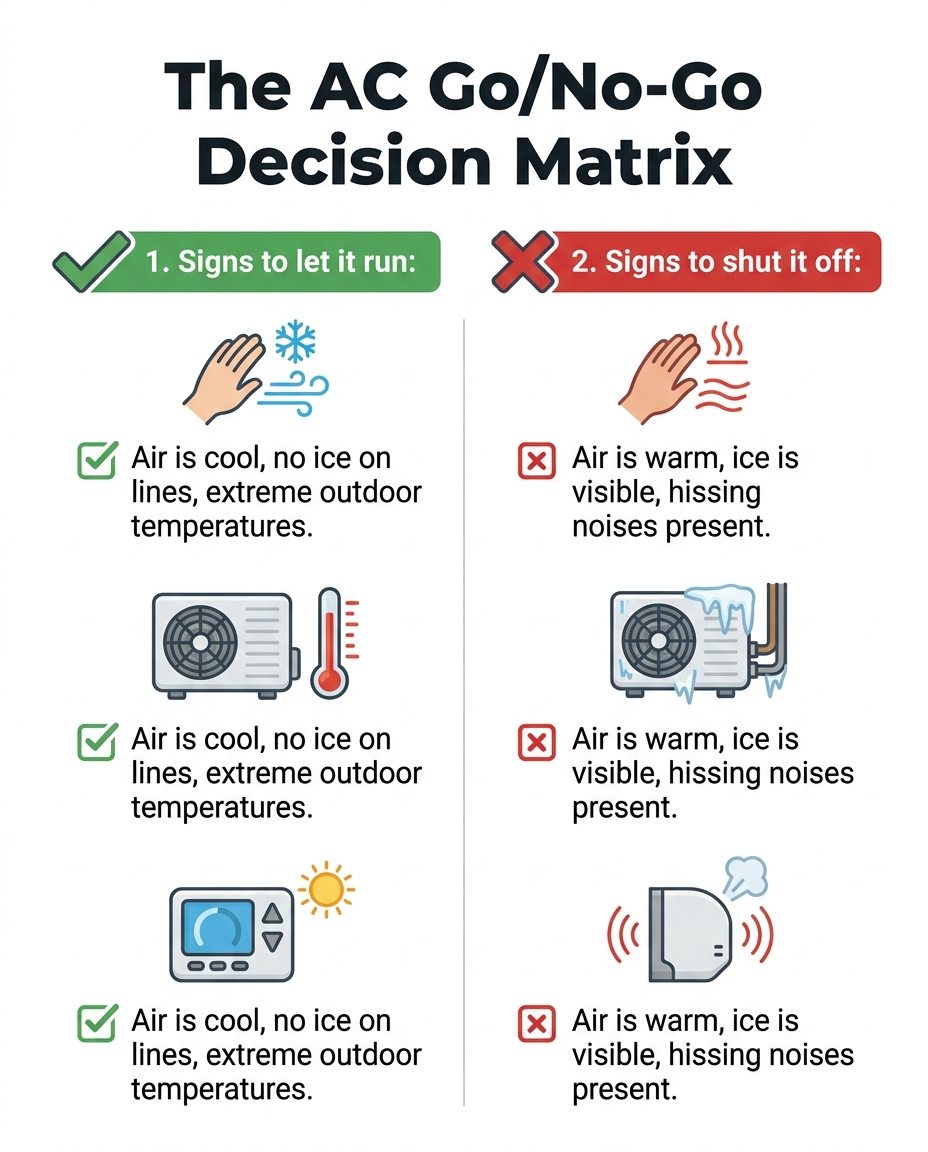
When you are staring at a thermostat that refuses to drop and listening to a system that refuses to shut off, you need a clear, actionable decision matrix. You must decide whether to turn the system off immediately to protect the equipment or let it run to maintain whatever minimal comfort it can provide while you wait for a technician.
At Washburn Air, our reliable diagnostic expertise emphasizes that a professional assessment is critical to accurately distinguish between a capacity limit and a leak before catastrophic failure occurs. However, you must make the initial call on whether to kill the power.
The Decision Matrix
| Symptom Observed | System Status | Immediate Action Required |
|---|---|---|
| Air from vents is crisp and cool (15-20 degrees colder than room temp). | Likely maxed out by extreme July peak summer heat or undersized. | GO (Let it run): Keep the system on. Close blinds, avoid using the oven, and wait for the sun to set. |
| Air from vents is lukewarm or room temperature. | Likely a refrigerant leak or failed compressor component. | NO-GO (Shut it off): Turn the thermostat to ‘Off’ immediately to prevent overheating the compressor. |
| Visible ice on the indoor coil or outdoor copper lines. | System is freezing due to low airflow or low refrigerant. | NO-GO (Shut it off): Turn the thermostat to ‘Off’. Turn the fan setting to ‘On’ to help thaw the ice. |
| Loud grinding, screeching, or hissing noises from the outdoor unit. | Imminent mechanical failure or active high-pressure leak. | NO-GO (Shut it off): Cut power at the thermostat and the breaker immediately. Call for emergency service. |
What to do while waiting: If you determine your system is in a NO-GO state, switch the thermostat from ‘Cool’ to ‘Off’, but turn the fan setting from ‘Auto’ to ‘On’. This keeps the indoor blower motor running, circulating unconditioned room air over the frozen evaporator coil. This safely thaws any hidden ice buildup, ensuring the technician can properly diagnose the system the moment they arrive.
Frequently Asked Questions About Struggling AC Systems
When your home is uncomfortably warm and the cooling equipment refuses to cycle off, you likely have several pressing questions. Here are detailed answers to the most common concerns homeowners face when their system is struggling to maintain an 80 degrees indoor temperature.
Why is my AC running but the house is still hot?
It could be operating at its maximum design capacity during extreme weather, or it may suffer from airflow restrictions or a mechanical issue like low refrigerant. If the outdoor temperature is well over 100 degrees, the system might simply be pulling heat out as fast as it can, but the heat is entering the home faster than the equipment can remove it. Alternatively, if the air coming out of the vents is not cold, the constant running is a symptom of a mechanical failure. A system starved of refrigerant or choking on a clogged filter will run continuously in a vain attempt to satisfy the thermostat, wasting energy while the house remains hot.
Should I turn off my AC if it’s not cooling?
We strongly advise our customers: yes, if it is blowing warm air or if you see ice on the unit, turn it off immediately to prevent compressor damage. Leaving a malfunctioning system running forces the compressor to operate without the cooling benefit of the returning refrigerant gas, which quickly leads to motor burnout. However, if the system is blowing cool air but just cannot keep up with the extreme afternoon heat, it may be safe to leave on. In that scenario, the equipment is functioning properly but is simply outmatched by the thermal load of the sun.
How do I know if my AC unit is undersized?
An undersized unit will run constantly during hot weather but fail to reach the thermostat setting, even when the mechanical components are working perfectly. You will notice that the system performs adequately at night or on mild days, but completely loses ground the moment the afternoon sun hits the house. The only definitive way to confirm if a unit is undersized for a specific home is to have a professional perform a manual load calculation. This calculation factors in your home’s square footage, ceiling height, window placement, and insulation quality to determine the exact cooling capacity required.
What is the normal temperature differential for an AC?
A healthy AC system typically produces a temperature drop (Delta T) of 15 to 20 degrees between the return air and the supply air vents. This means if your thermostat reads 80 degrees and that is the temperature of the air being pulled into the return grilles, the air blowing out of your ceiling or floor registers should measure between 60 and 65 degrees. If the differential is significantly less than 15 degrees, the system is not removing enough heat, pointing to issues like a refrigerant leak or a failing compressor. If the differential is much higher than 20 degrees, it often indicates a severe airflow restriction.
Can a dirty air filter cause my house to stay warm?
Yes, a severely clogged filter restricts airflow over the evaporator coil, severely reducing cooling capacity and potentially causing the system to freeze over. The air conditioner relies on a precise volume of warm indoor air blowing across the cold coils to facilitate heat transfer. When a thick layer of dust and pet dander blocks that airflow, the coils get too cold and the moisture in the air freezes into a solid block of ice. Once the coil is encased in ice, air can no longer pass through it, leaving your house warm while the system runs continuously.
Get Professional Diagnostics Before Minor Issues Become Major Failures
Guessing whether your cooling system is simply an undersized unit battling the heat or a failing machine with a dangerous refrigerant leak is a risky gamble. When you assume the system is just struggling against the Grapevine TX sun, you might inadvertently allow a minor leak to escalate into a catastrophic compressor burnout. The difference between a routine diagnostic visit and a major system replacement often comes down to how quickly you shut the system down and seek expert help.
If you are still asking yourself, “Is Your AC Running Constantly but the House is Still 80 Degrees?”, it is time to stop guessing and get definitive answers. Schedule a professional diagnostic evaluation to pinpoint the exact cause of the cooling failure. Contact our team of local experts at Washburn Air for reliable, accurate troubleshooting that protects your equipment and restores your home’s comfort.